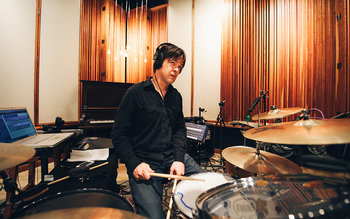
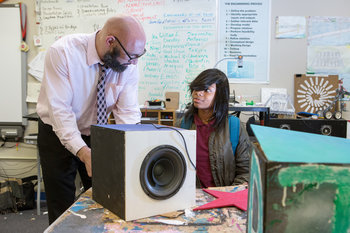
Analog is continuous information of very high precision that is often incorrectly described as "infinite." The universe is inherently analog. For example, sound waves and light waves are analog streams of information that can be measured at greater and greater precision that feels almost infinite. This can be contrasted with digital information used by machines that consists of sequences of 0s and 1s that have a finite and well-defined precision. The following are common examples of analog things.
Analog Amplifier
Analog Computer
Analog Data
Analog Electronic Circuit
Analog Synthesizer
Analog Television
Cameras (Film)
Cassette Tape
Clocks (with hands)
Dial (e.g. volume dial on a stereo)
Electromagnetic Waves
Headphones
Human Mind
Human Voice
Light & Color
Microphones
Musical Instruments
Natural Sounds
Photocopiers
Pinball Machine
Radio
Record Players
Sensors (e.g. gyroscope)
Sound
Speakers
Speedometer
Sundials
Thermometer
VCRs
Weight Scale
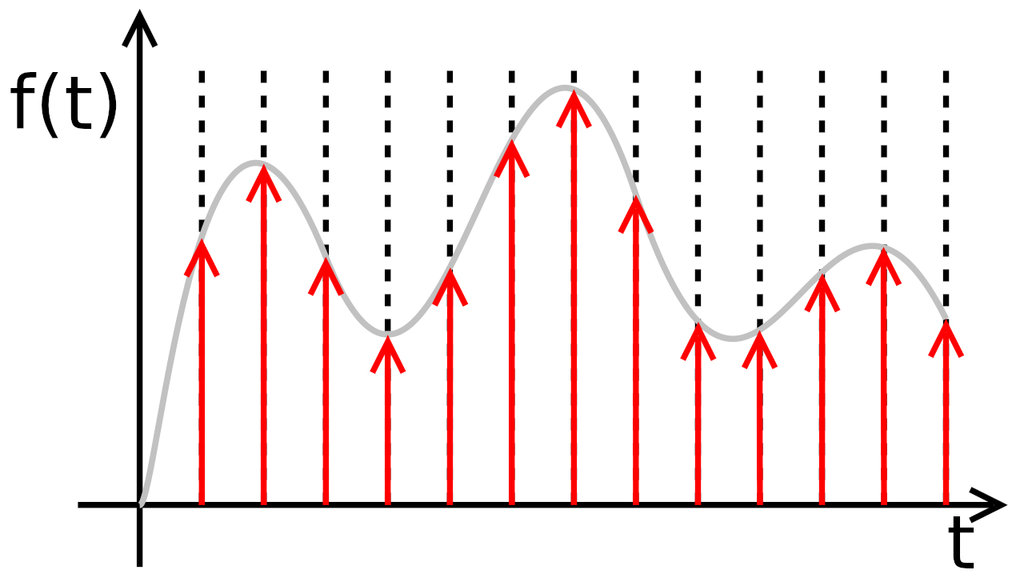
Analog data is most commonly organic information that is captured from the real world. For example, the light captured by film in a camera.Many of the things above have both analog and digital versions. For example, a clock with hands is analog as in theory the hand could constantly move at great precision. A clock with a numeric display is considered "digital" because its precision is exactly constrained to a unit such as minutes, seconds or milliseconds. In theory, a clock hand could have infinite variation between 12:01 and 12:02. A digital clock that displays hours, minutes and seconds would only have 60 variations between these two times.Analog is often described as having infinite precision. Generally speaking, this isn't strictly true. For example, a sound could be recorded at ever greater precision. However, the physics of the sound -- a propagation of energy through matter has some fixed representation that isn't infinite e.g. particles of air aren't infinitely small and their interactions aren't infinitely complex. Likewise, the precision of an analog device, recording, display, sensor or data recording isn't really infinite but is rather dictated by the physics of the events recorded and the devices recording them. For example, an LP record has physical limitations on the amount of information it can store and isn't a magical source of infinite information. It would be more accurate to say that a record has undefined precision as opposed to infinite precision.The human brain is analog. For example, we see streams of light as streams of electrical signals that create the perception of color.Digital technologies have the advantage that copies are exactly the same because they have known precision and well-defined attributes. When you copy analog signals, information is usually lost. It is commonly claimed that copying analog signals always results in information loss but this isn't strictly true as it is based on the questionable assumption that analog information is infinite.Analog computers are mostly experimental. However, it is very common for digital computers to interface with analog input and output devices. For example, a microphone that captures analog sound that gets converted to digital by a computer.Speakers and headphones create inherently analog sounds in the real world that is often converted from a digital source such as an mp3 file. Analog is often a continuous wave of information that is converted to digital with sampling. For example, the grey line (below) represents continuous sound that can be sampled as digital data at points as symbolized by the red arrows (below).
143 Shares
Analog
This is the complete list of articles we have written about analog.
Cookies help us deliver our services. You have choices regarding these cookies. Please visit our privacy policy, cookie policy and consent tool to learn more.
Copyright 2002-2026 Simplicable. All rights reserved. This material may not be published, broadcast, rewritten, redistributed or translated. Report violations here.