Image

Archiving The World’s Oldest Webcam Feed

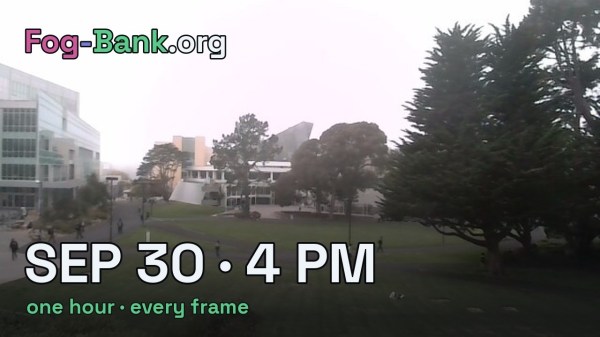
FogCam is the oldest webcam feed that’s still up and running. Installed at San Francisco State University, it’s been slowly uploading a new image to the web every 20 to 60 seconds or so since September 30, 1994. Very few of those images have ever been saved, but [Justin Earl] has come along to fix that with Fog-Bank.

[Justin] was eager to have top-notch coverage of the FogCam, so set up four separate catchers across three separate networks to scrape images from the feed. He runs one on his own server, one on his home machine, and two small programs running on Cloudflare. Each catcher reports the time it grabbed a fresh image from the site. FogCam has never replaced an image within 19 seconds, so as long as one of the catchers grabs an image at least every 18 seconds, [Justin]’s system should be archiving everything that’s being captured.

Currently the archive hosts over 169,000 images across 377 days, though the majority of that content is from a 2019 archive effort when it was believed the camera would soon be shut down. More stats are available, too.

It’s not the most interesting view in the world, but it’s neat to see such a project continue running long enough to celebrate its 32nd birthday this week. We’ve featured other neat webcam-related content before, too. Meanwhile, you can go check out the live feed if you want to peer through FogCam yourself. Continue reading “Archiving The World’s Oldest Webcam Feed” →
Image

Marion Stokes Fought Disinformation With VCRs

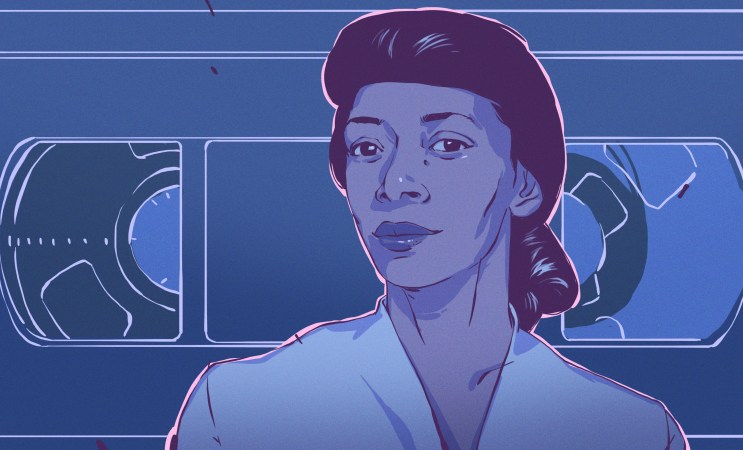
You’ve likely at least heard of Marion Stokes, the woman who constantly recorded television for over 30 years. She comes up on reddit and other places every so often as a hero archivist who fought against disinformation and disappearing history. But who was Marion Stokes, and why did she undertake this project? And more importantly, what happened to all of those tapes? Let’s take a look.

Marion the Librarian

Marion was born November 25, 1929 in Germantown, Philadelphia, Pennsylvania. Noted for her left-wing beliefs as a young woman, she became quite politically active, and was even courted by the Communist Party USA to potentially become a leader. Marion was also involved in the civil rights movement.

Continue reading “Marion Stokes Fought Disinformation With VCRs” →

Image

A Treasure Trove Of Random Vintage Tech Resources

Finding, collecting, and restoring vintage tech is the rewarding pastime of many a Hackaday reader. Working with old-school gear can be tough, though, when documentation or supporting resources are hard to find. If you’re in need of an old manual or a little scrap of software, you might find the Vintage Technology Digital Archive (VTDA) a useful destination.

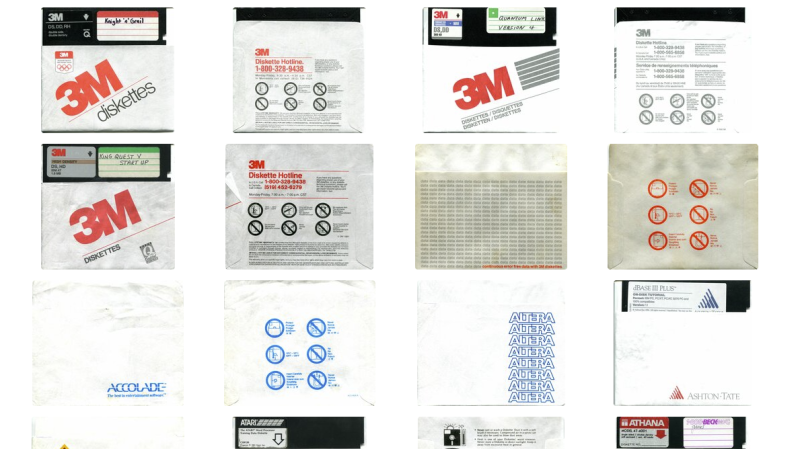
The VTDA is a simple website. There is no search function, or fancy graphical way to browse the resources on offer. Instead, it’s merely a collection of files in a well-ordered directory tree. Click through /pics/DiskSleeves/VTDA/ and you’ll find a collection of high-resolution scans of various old diskettes and their packaging. /docs/computing/Centronics/ will give you all kinds of useful documentation, from press releases to datasheets for printers long forgotten. You can even find Heathkit schematics and old Windows bootdisk images if you dive into the depths.

While it doesn’t have everything, by any means, the VTDA has lots of interesting little bits and pieces that you might not find anywhere else. It’s a great counterpart to other archival efforts out on the web, particularly if you’re a member of the retrocomputing massive.

Thanks to [Itay] for the tip!

Hackaday Links Column Banner

Hackaday Links: August 10, 2025

We lost a true legend this week with the passing of NASA astronaut Jim Lovell at the ripe old age of 97. Lovell commanded the ill-fated Apollo 13 mission back in 1970, and along with crewmates Jack Swigert and Fred Haise — along with just about every person working at or for NASA — he managed to guide the mortally wounded Odyssey command module safely back home. While he’s rightly remembered for the heroics on 13, it was far from his first space rodeo. Lovell already had two Gemini missions under his belt before Apollo came along, including the grueling Gemini 7, where he and Frank Borman undertook the first long-duration space mission, proving that two men stuffed into a Volkswagen-sized cockpit could avoid killing each other for at least two weeks.

Continue reading “Hackaday Links: August 10, 2025” →

Image

Meet The Optical Data Format You’ve Never Heard Of Before

You consider yourself a power user. You’ve got lots of files, and damn it, you like to keep them backed up. Around a decade ago, you gave up on burning optical discs, and switched to storing your files on portable hard drives. One local, one off-site, and a cloud backup just to be sure. You’re diligent for a home gamer, and that gets you done.

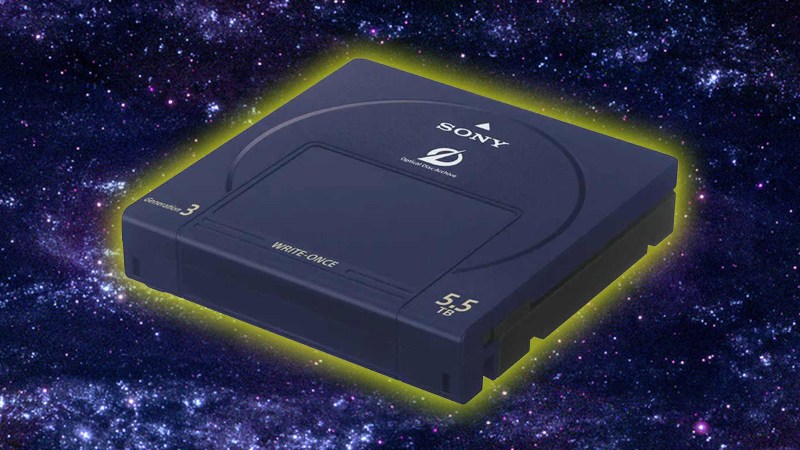
The above paragraph could describe any number of Hackaday readers, but what of bigger operations? Universities, businesses, and research institutions all have data budgets far in excess of what the individual could even imagine. What might shock you is that some of them are relying on optical media—just not the kind you’ve ever heard of before. Enter Sony’s Optical Disc Archive.

Continue reading “Meet The Optical Data Format You’ve Never Heard Of Before” →

Image

VHS-Decode Project Could Help Archival Efforts

Archiving data from old storage media can be a highly complex process. It can be as simple as putting a disk in an old drive and reading out the contents. These days, though, the state of the art is more complex, with advanced techniques helping to recover the most data possible. The VHS-Decode project is an effort to improve the archiving of old analog video tapes.

The project is a fork of the LaserDisc-focused ld-decode, started by [Chad Page] back in 2013, which readers may recall was used for the Domesday Duplicator — a device aimed to recover data from the BBC’s ancient Domesday LaserDiscs. VHS-Decode is designed to capture the raw RF signals straight out of a tape head, which are the most direct representation of the signals on the physical media. From there, these signals can be processed in various ways to best recover the original audio and video tracks. It’s much the same technique as is used by floppy disk recovery tools like the FluxEngine.

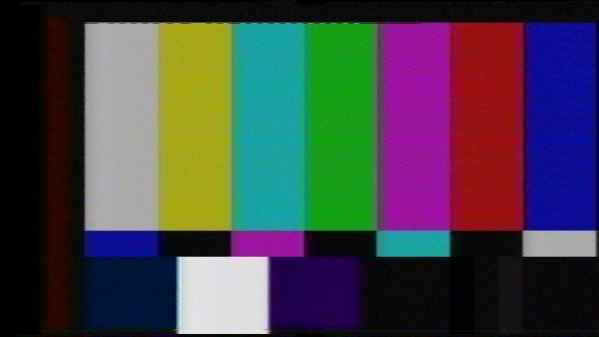
Despite the VHS name, the code currently works with several tape formats. VHS, S-VHS and U-Matic are supported in PAL and NTSC formats, while Betamax, Video8 and High8 tape capture remains a work in progress. Using the code requires a video tape player with test points or traces that make signals from the head accessible. Capturing those signals is achieved via a Domesday Duplicator hardware device, or alternatively a Conexant CX2388x analog-to-digital converter, often found in many old PCI TV tuner cards. Various techniques can then be used to turn the captured signals into watchable video files.

We love a good archival project, and VHS-Decode is clearly a useful tool when it comes to salvaging old video tapes. Continue reading “VHS-Decode Project Could Help Archival Efforts” →

Image

Ask Hackaday: Why Did GitHub Ship All Our Software Off To The Arctic?

If you’ve logged onto GitHub recently and you’re an active user, you might have noticed a new badge on your profile: “Arctic Code Vault Contributor”. Sounds pretty awesome right? But whose code got archived in this vault, how is it being stored, and what’s the point?

Continue reading “Ask Hackaday: Why Did GitHub Ship All Our Software Off To The Arctic?” →