Image

Cheap 80s Keyboard Gets Modern Brain Upgrade

The 1981 Casio VL-1 was a fine cheap keyboard. It had a robust build, though an admittedly limited sound palette. [Max Vega] had one of these charming instruments, and decided to use modern tech to rebrain it for the modern world.

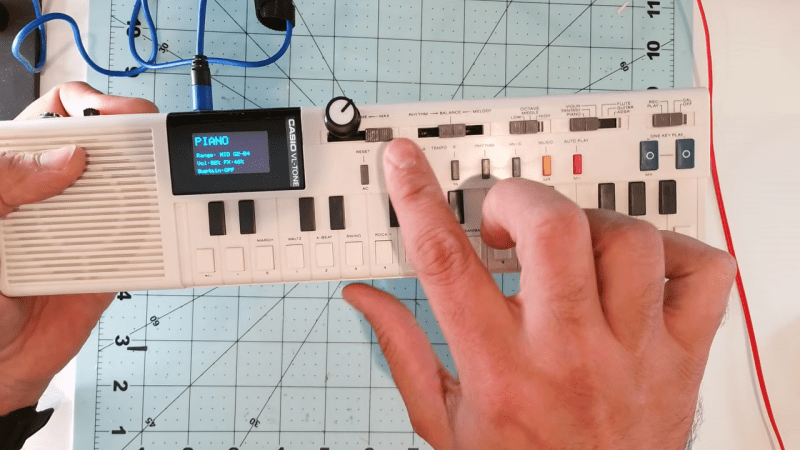
The original electronics of the VL-1 were largely surplus to requirements for this build. The original interface and speaker were kept in service, while the rest of the monophonic sound synthesis hardware was removed. [Max Vega] enlisted an ESP32-C3 to run the show, turning the VL-1 into a ROMpler instead. If you’re unfamiliar with the term, it refers to a keyboard or other instrument that relies on hardcoded sample playback instead of raw synthesis. The ESP32 loads its samples from a microSD card, which provides an enormous amount of storage for different sound packs. Selecting different instruments is handled with a simple interface built around the original buttons and a OLED screen.  Playing the instrument is still the same using the simple keyboard, though [Max] also implemented some extra fun modes that play chords at a single touch.

If you want a fun, versatile keyboard instrument that fits perfectly in a backpack, it’s hard to go wrong with a build like this. We’ve seen similar Casio keyboard hacks before, too. Video after the break.

Continue reading “Cheap 80s Keyboard Gets Modern Brain Upgrade”
Image

CSS On The ESP32

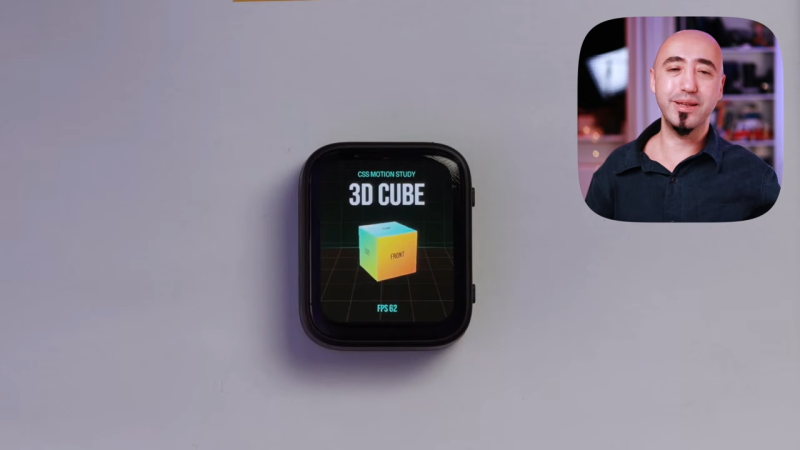
There are lots of graphics libraries available for the ESP32, and lots of ways to program one to boot. Even still, most of us wouldn’t immediately think to CSS when it comes to embedded products — yet that’s now a thing on the Espressif platform, apparently.

The Gea stack allows one to compose CSS and TypeScript code that is then turned into generated C++ code that compiles to native firmware. The team behind Gea have demoed this ability by running a 3D cube animation on an ESP32 at up to 60 FPS. This isn’t some ugly, low-res wireframe demo, either. It’s a full-color animation running on a 410×502 AMOLED screen. It’s very fluid, and can even handle transparency on the cube faces (albeit with a performance penalty).

It’s worth noting that this isn’t a full browser engine. As you might expect, some concessions had to be made to get it running on the ESP32. Namely, it doesn’t handle “:hover” states because it’s designed for touchscreen use, fonts are rasterized, and the UI tree is limited to just 512 nodes. Regardless, it shows that using CSS and TypeScript to develop for the ESP32 is entirely possible without some crazy loss of performance. If you want to build easy interfaces on an ESP32 while leaning on web dev experience, this could be very useful indeed.

There are lots of fun ways to write code for the ESP32; you can even try MicroPython if you like.

Continue reading “CSS On The ESP32”

Image

Increasing Local GPS Accuracy For A Small Robot

Even though GPS makes it possible for us to easily navigate around the planet in almost any vehicle we’d like, whether that’s a passenger vehicle, airplane, or cargo ship, it’s not really suitable for applications that require sub-meter accuracy. For that, some specialized hardware is needed, and [GreatScott!] shows us how to do it using a small robot as a platform.

The key to extremely accurate GPS signals in this case is using a receiver that supports real-time kinematic positioning (RTK). This type of system relies on a base station with a known position communicating with local mobile receivers to increase the precision of those mobile receivers by comparing the phase angle of the received signals. Of course these modules are much more expensive than the average standard GPS receiver, but for this kind of accuracy there is always a cost.

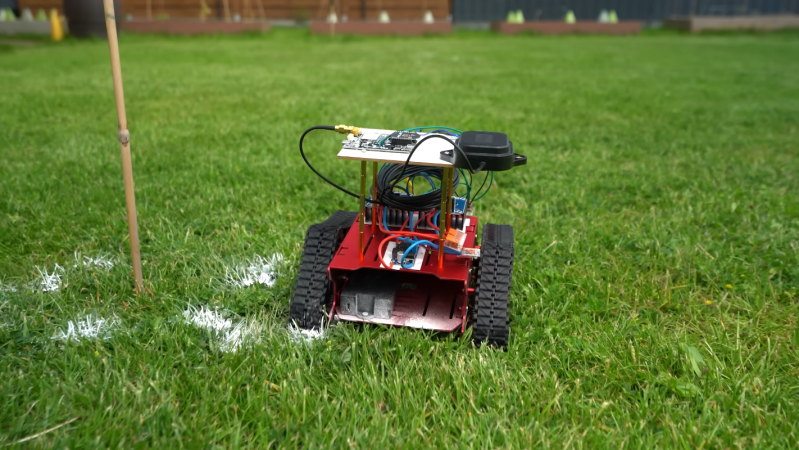
After getting a baseline accuracy of around two meters with a standard GPS receiver, [GreatScott!] installs the RTK GPS mobile receiver on a tracked robotic platform and a base station on a fence post. With the RTK system running, the limiting factor in accuracy became the robot’s steering system, as its turning radius and steering algorithms weren’t up to the task of hitting centimeter-sized targets out of the box.

But, as a proof-of-concept, it goes to show how accurate GPS can be as long as the right hardware is used, and for practical applications is good enough to mow a lawn with a robot or even do some amateur land surveying.

Continue reading “Increasing Local GPS Accuracy For A Small Robot”

Image

Flying Cell Towers Are A Thing

Typically, when you’re sitting on a plane on the tarmac, you switch your phone to flight mode while you’re sitting through yet another “quirky” (boring) safety video. You’ll watch some inflight entertainment, read the airline magazine if you get really desperate, and wonder if anyone ever buys those random watches for sale in the “duty free” section. Then, finally, upon landing, you’ll be connected back to the Internet and you’ll finally feel like you can breathe again.

Only, this time, you forgot to set your plane on flight mode. You’re sitting at 30,000 feet, and… your phone has signal? You’re online, and you’re getting notifications and emails just like you’re on the ground. You’ve accidentally discovered that your flight has an on-board cell tower.

Continue reading “Flying Cell Towers Are A Thing”

Image

New Record Resurrects Long-Dead CD Graphics Format

Audio CDs were the ubiquitous audio format of the 1990s. Lesser known were the extensions to the format that packaged all kinds of interesting additional data into a musical release. Now, a new record from [Aizysse Baga] has brought back some of the most quirky and obscure CD features that time and industry long forgot.

[Aizysse Baga] worked with [Adelaide] on the Divacore record, which was to be released on a mini-CD. The original plan was to include additional CD+G data, featuring artwork to go with the music. CD+G, or CD+Graphics, was often used to display synchronized lyrics for karaoke releases, and stored data in formerly-unused subcodes next to the track start, track number, and running time data. This format allowed storing a slideshow of images with a resolution of 288 x 192 with a 16 color palette.

Image
Note the quality difference between the 16-color CD+G and the 256-color CD+EG images.

The duo got handy with art and some smart dithering to get great 16-bit artwork packed in to the audio CD release, with the aid of a custom Python encoder. CD-TEXT metadata was thrown in for good measure. Then, the existence of the more advanced CD+EG became apparent. This was a 256-color extension to the CD+G format that was backwards compatible to boot. It was a format that was barely ever implemented on any commercial releases, and very little hardware could even display it. Naturally, Divacore had to have it. Much work was done to understand the Red Book documentation on the standard and figure out how to implement even higher quality artwork for the record.

After so much work to understand and implement the CD+G and CD+EG data, the question was whether it would survive the CD reproduction process for the final release. Thankfully, the final discs came out perfectly, and the full 256-color CD+EG artwork can be seen in all its glory if you happen to play Divacore on a Sega Saturn or a super-obscure Victor VS-G2 or VS-G3. Throw it in a less-sophisticated karaoke machine or something like an Amiga CD32, and you’ll still get to see the 16-color versions for your trouble.

We love to see ancient formats brought back to life, particularly those that never got their time in the sun. If you’re working hard to resurrect something the mainstream media world has forgotten, let us know on the tipsline.

Image

A Look At A Gaggle Of Transputer Boards

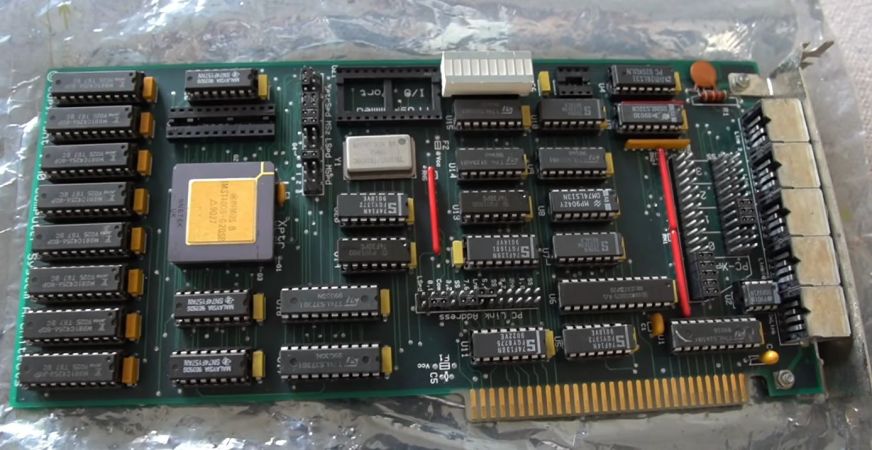
A long time before Beowulf clusters wired up with commodity Ethernet hardware became a hobbyist thing and a running joke, the transputer took a swing at a very similar architecture. This used stand-alone computers that were networked together with other transputer systems, to achieve task-level parallelism. For some people like [Lance Harvie] this is the kind of hardware that he used during his university years for a project, with him not only still having that hardware, but also recently adding to this collection with a recent eBay purchase.

The transputer story is a fascinating one, forming a major part of the UK’s semiconductor industry during the 1980s, creating a strong legacy as the computer industry awkwardly tried to figure out what types of parallelism to target. Whereas the industry largely moved to instruction-level (superscalar) parallelism alongside tightly coupled task-level parallelism along with multiple CPU cores on a single die, one could consider today’s supercomputer clusters to be one example of the transputer legacy.

Continue reading “A Look At A Gaggle Of Transputer Boards”

Image

A More Convenient IButton Reader

iButtons are microchips housed in small, round, metal containers, and are similar to coin cell batteries in appearance. Among other things, they’re used for logging data in industrial contexts, particularly where it’s desirable to track parameters like temperature over time. [Geoffrey Wells] has worked with these sensors, and decided that the aging solutions for reading these devices are too cumbersome and out-of-date. Thus, he designed ChillPoint as a more modern solution.

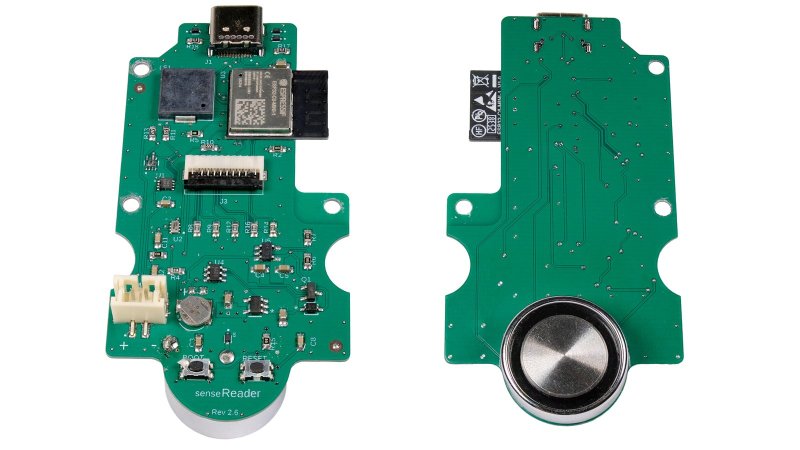
As you might have guessed by the name, [Geoffrey] was inspired to build a rig specifically for inspecting iButton data loggers in cold chain logistics applications. It’s built around an ESP32-C6, which has a 1-Wire probe on the front for communicating with the target device. On contact, the reader dumps all the data, storing it on its own flash storage. The data can then further be accessed by connecting to the ChillPoint handheld device over its own WiFi access point, upon which it hosts a web UI for access. The handheld can be used for scanning iButtons single-handed, while a smartphone, tablet, or laptop can be used as a screen to monitor the results live.

The project is nearing completion, and [Geoffrey] says both the hardware and software will be open source once it’s all said and done. Anyone interested in adding a ChillPoint to their toolbox should keep an eye out for its upcoming CrowdSupply campaign.

If you find yourself working with these devices on the regular, this project may be appealing to you. We’ve looked at iButtons many times over the years. The Java Ring was probably the coolest.