Showing posts with label Dickens. Show all posts

Friday, December 22, 2017

A Christmas Carol


Update: The Scrooges at YouTube have erased this video and all versions of the Sims' movie you don't have to pay for one way or another.  Bah, humbug!

The modern Christmas story has to be Charles Dickens' A Christmas Carol.  First of all he wrote it just as the kind of Christmas traditions we observe today were becoming standard.  That includes Christmas carols themselves.  The first collection of now familiar carols was published less than a decade before he wrote this, and it would still be another 30 years or so before they were widely sung--by the Salvation Army on the streets first, and then in churches.

It's a classic story, even apart from Christmas.  Some writers and critics have tried to reduce the number of story plots to a basic minimum.  Author Robert Heinlein chose three plots to which all stories adhere, and the exemplar of one is A Christmas Carol--by being confronted with harsh or inspiring facts, the protagonist changes.

Dickens wrote it in 1843, the first of his annual Christmas stories, although he wrote about Christmas--and ghosts--throughout his career.  He depicted a Christmas celebration in his first serialized novel, The Pickwick Papers, which made him famous.

Ghost stories were an even older tradition of the season, probably a remnant of the winter storytelling of the ancestors that was part of Indigenous cultures.  Dickens combined them with a particular social conscience about the gap between rich and poor, and the huge difference in their lives in London.  It was a feature of the industrial age that we have inherited, adding new elements of it to what's being called income inequality in our time--as well as poverty and homelessness.

The shared responsibility to deal with this systematic suffering was becoming a Dickens passion in the 1840s.  He was working on his novel on the theme of selfishness, Martin Chuzzlewit, at the time he wrote A Christmas Carol.  But in Scrooge's memories of his childhood, Dickens worked with memories from his own childhood that he would write about more specifically in a later novel, the celebrated David Copperfield.

There have been many dramatizations of the story, which often turn the empathetic elements into sentimentality. Still, some movie versions do better than others, or have some overriding feature that sets them apart.

Probably the most famous adaptation is the 1951 Scrooge with the most famous performance of the title character by Alastair Sims.  It's the YouTube film at the top of this column, in a very good black and white print.

The most recent retelling I know of is the Disney animation of a few years ago, which I have not seen.  I'm partial to Patrick Stewart's 1999 movie, which I've got on tape but can't find in a decent version on the net for free.  The 1984 George C. Scott version is pretty good.  Scott starts out as a familiar modern Scrooge, with the awful charm of the ruthless businessman--it's not coincidence it was made in the 1980s.

David Warner brings some credibility to Bob Cratchit in this version, and though much of the storytelling is pedestrian, it's all worth Scott jumping on the bed when he realizes he has been given a second chance.  It's not really up to the Sims version but it has its moments.

This video below is the best I could find on YouTube.  You have to deal with periods of commentary (by two western Pennsylvania dudes with the accents I know so well) and there's some distortion in the picture but overall it's a pretty good print with excellent sound. Merry Christmas everyone.


Monday, July 31, 2017

Hero of His Own Life? Notes on Dickens' Copperfield

Image
Bob Hoskins as Micawber, Daniel Radcliffe
as young David in the 1999 BBC/PBS version.
“Whether I shall turn out to be the hero of my own life, or whether that station will be held by anybody else, these pages must show.”

It's one of the most famous opening lines in literature, and after reading Charles Dickens' David Copperfield again,  I'm struck by the ambiguous answer I might give. For in key moments, it isn't David Copperfield who is heroic, but other characters.

The novel has the usual thoroughly evil Dickens' villains: David's cruel stepfather Murdstone and Murdstone's echoing sister Jane, the craven and cruel schoolmaster Creakle (a brief appearance but so meaty that Laurence Olivier and Ian McKellan both made a ham sandwich of him in film versions) and the unforgettable Uriah Heep.  There are the usual slyly satiric portraits of institutions of law and order, and the men who make their livings from them, more than hinting at Dickens' underlying outrage and disdain.

 There is also a hero (at least in David's eyes) who commits acts of villainy that Copperfield condemns, yet he persists in remembering him "at his best."  There is a kind of angel or goddess, a child woman, a girl who yearns too much, a wayward girl, and an old woman servant with a heart of gold.  There are the stalwart and large-hearted men of the sea, Mr. Peggotty and Ham.

And there are the somewhat comic characters that populate a Dickens novel: his Aunt Betsey and her friend Mr. Dick, the eternal complainer Mrs. Gummidge, Copperfield's school friend and later companion the hapless Traddles, and the most famous of all, the scoundrel with a heart of gold, Mr. Micawber, and his long-suffering wife.

As he does in other novels, Dickens' pegs several of these "minor" characters with their repeated turns of phrase and small repeated behaviors.  But notably and in some respects unexpectedly, several of them do the heroic deeds.  It's Micawber and Traddles who bring Uriah Heep to heel.  It's Aunt Betsy who rescues young David, Mr. Peggotty who with the help of the wayward girl rescues the girl who yearns too much, Emily. And it's Ham who dies attempting to rescue a survivor of a storm at sea.  Even Mrs. Gummidge becomes heroic.

It's true of course that classical heroes often have decisive help, and couldn't accomplish their goal without aid.  And David does have his moments, particularly when he suddenly becomes the financial support of others and applies himself with discipline and hard work.  But it took the special interest and attention of others, as well as their good-heartedness and generosity, responding to  David's good-heartedness and generosity, for him to succeed.

Image
The Signet edition I read, which was the
first to include the entire text
Since I knew the story, both from having read the book before and from seeing a couple of film versions, the emotional response to key happenings was muted, and I was better able to appreciate how Dickens created his effects, and generally to savor the details.  So while it didn't have the emotional resonance of reading W.G. Sebald's enigmatic The Emigrants, which I also recently finished, it provided other pleasures.

But it's probably more than that.  When I was younger I was more than impatient with the pace and language of 19th century novels--it took great effort to sit still for them.  I craved faster prose and faster styles of storytelling that I found especially in some contemporary authors.  I was young, it was the 1960s, my metabolism was set to rock music.  I eventually could become immersed in the images of foreign films but I found these books difficult to sink into.

That's not a problem now.  My old metabolism is happy to read those long sentences and long books, though I take my time, and read not much more than a chapter at a sitting.  For both reasons, I read with delight, savoring the language and narrative skill.

For example, he gives us the murderous-hearted Mr. Murdstone (need it be said for a character in Dickens that he's aptly named?  J.K. Rowling must have known her Dickens) and his sister, Miss Murdstone, as the tyrants of David's young life.  Then after leaving them behind in David's boyhood, he inexplicably and a bit awkwardly makes Miss Murdstone the paid companion of David's employer's daughter who he loves and intends to marry.

But it pays off in a confrontation scene.  After Miss Murdstone has informed on David, the father opposes the marriage.  As the scene begins with formalities, Dickens reminds us of Miss Murdstone's character with a memorable expression.  He doesn't say that David takes her cold hand in greeting, but that "Miss Murdstone gave me her chilly finger-nails, and sat severely rigid."  What a sentence!
Image
The novel was originally serialized, and
structured so that each installment ended
in a "cliffhanger."
But the resonance is given additional power at the end of the conference, as David observes: "Miss Murdstone's heavy eyebrows followed me to the door...and she looked so exactly as she used to look, at about that hour of the morning..." when she glowered at him over his lessons.

It's true that David doesn't exhibit much psychological acuity, apparently not sensing that his first choice for a wife replicated qualities of his mother.  But on more general matters he shows some insight. “I had considered how the things that never happen are often as much realities to us, in their effects, as those that are accomplished.”

This was a popular work of fiction, serialized in a periodical.  So the philosophical observations in the writing may not be earthshaking but remain essential--and especially essential to Dickens, as in the ruminations of a very minor character near the end of the novel:

“Dear me,” said Mr. Omer, “when a man is drawing on to a time of life, when the two ends of life meet...he should be over-rejoiced to do a kindness if he can... And I don’t speak of myself particular, because, sir, the way I look at it is that we are all drawing on to the bottom of the hill, whatever age we are, on account of time never standing still for a single moment. So let us always do a kindness, and be over-rejoiced.”

As for the film versions, they may guide the reader through main events and give visual references to the characters, but they are far too short to suggest the richness and riches of the book.  It's good to have a guide through the story, though, and fun to see good portrayals of the characters.

Probably the best version is the 1999 BBC/PBS miniseries, mostly because it is the longest.  But even this one is not full enough--after lavishing attention on the earlier parts of the novel, it rushes through climactic scenes and invents others.  One notable change is the fate of Uriah Heep.  In the movie he is arrested and is seen as a prisoner to be transported to a penal colony in Australia.  But in the novel, Micawber and Traddles force Heep to make restitution and return funds he had stolen, under threat of exposure.  Dickens clearly doesn't trust the justice system of his day. (The film's solution also muddles the positive meaning of a new life in Australia for other characters in this book.)

Image
But this film version features a fine performance by Daniel Radcliffe as the very young David, shortly before he became Harry Potter.  Other performances are definitive: Maggie Smith is Aunt Betsey, Nicholas Lyndhurst is Uriah Heep and so on down the line--in particular, Bob Hoskins as Mr. Micawber (and that's saying something, since the role was also played in movie versions by Ralph Richardson and W.C. Fields.)

The one questionable role was the adult David Copperfield, and that seemed to be the case in all other film versions.  Probably it is not the fault of the actors--in this case, perfectly serviceable--but in the role.  He is the center of the action, but he mostly reacts.  Still, it's notable that well-known actors played the "minor" roles, and not this one.

Which suggests again but doesn't answer the first question posed.  David is the narrator of the story, and he becomes a writer in the course of the book. (Which could be one reason why Dickens named this as the favorite of his novels.) But is   he is the hero of his own life? Well, we might say of him as of ourselves: if not, who is?

Thursday, June 08, 2017

About Time and the Dickens

Image
I've recently finished reading Bleak House, one of Charles Dickens' big novels which some consider his best--some call it the best English novel of the 19th century.

I remember being impatient with 19th century novels when I studied literature in college, partly I'm sure because they were long and I was impatient with everything that didn't move along at the speed of rock music, and partly because of the tedious experience of being forced to read a few such tomes in high school classes, including Dickens' Great Expectations.

But my college teachers didn't insist on them, and as a writer I was more interested in 20th century novels of the so-called Modern period (as opposed to Contemporary, which were by living writers and hence not yet literature.  We were however expected to read contemporary stories and novels for writing classes.)  The irony is that by the late 1960s, the Modern novels and novelists were almost as obsolete in terms of contemporary writing as the 19th century novels.  But we still wanted to be Hemingway or Fitzgerald or James Joyce or Virginia Woolf.

It's true that the diction and style, and the rhythms of 20th century fiction were closer to what writers were writing then.  But we were encouraged to believe that the Modernists had rejected the past and so relevance started with them.

Like a lot I thought I learned in those classes, it turns out not to be true.  And that's one of the delights of living awhile--the perspective of your years and the opportunities to explore more of the cultural timeline expands and deepens a sense of the continuum.  You learn that nothing is completely new, that every artistic work takes a lot from the past as well as whatever else is around.  It became clear to me first in music, learning the roots of rock and other contemporary forms, not through theory but through people and the music itself.

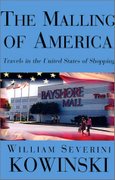
Except for some exploration of French classics in the 70s (under the influence of Truffaut films no doubt) it wasn't until the 1980s--some 15 to 20 years after I left school--that I could re-discover the diction of the 19th century (for in fact I'd absorbed some with boyhood reading of  The Three Musketeers, Huckleberry Finn, etc.)  I read all of Jane Austen I could find, and took on Moby Dick (which influenced my entire approach to my final draft of The Malling of America, though not in an obvious way.)  Of all the things I "knew" about Moby Dick without reading it, I didn't know that much of it is very funny.  I read War and Peace and Anna Karenina, the latter of which I found amazing, and I wished I had read it as a student writer.  My conception of what was possible in the novel would have benefited.

Image
Similarly I was startled by the freedom and virtuosity of Dickens in Bleak House as well as his powers of description.  In the immense space of that novel he could be satirical and naturalistic, transparently heartfelt and slyly ironic.  Some of it bordered on surrealism.  The moderns must have stolen a lot from Dickens, perhaps even while denouncing him.  (If I remember correctly, Dickens especially was pretty unfashionable in the 60s.)

But after 881 pages of the Signet paperback edition, I read the short afterword by Geoffrey Tillotson and learned that Dickens not only riffed on some of his contemporaries like Carlyle and Tennyson but learned his satiric technique from 18th century poet Alexander Pope.  This is the difference between working writers, who beg, borrow and steal from the best no matter their current standing, and the critics and teachers of literature, who decide who is fashionable and legitimate to read.

Image
I recently saw the Richard Curtis movie About Time.   It concerns a contemporary young man who learns from his father that the men in their family can travel through time, though only the past times of their own lives.  When his father (played by Bill Nighy) reveals this and the son asks him how he's used this gift, the Nighy character says he's used this infinite time to read books.  He's read everything he's wanted to twice, and Dickens three times.

At my age I read for the experience of it, while I'm reading.  I don't worry about how much I retain.  Well, I do notice the loss, but it doesn't stop me from reading as much as I can.  One thing has remained true, and perhaps become more true: I read not so much for story or even characters but for the diction, the vocabulary, the rhythms.  The words, the sentences, and so on.   I guess you can say I read for a good time, but what constitutes a good time for me would probably mystify most people.