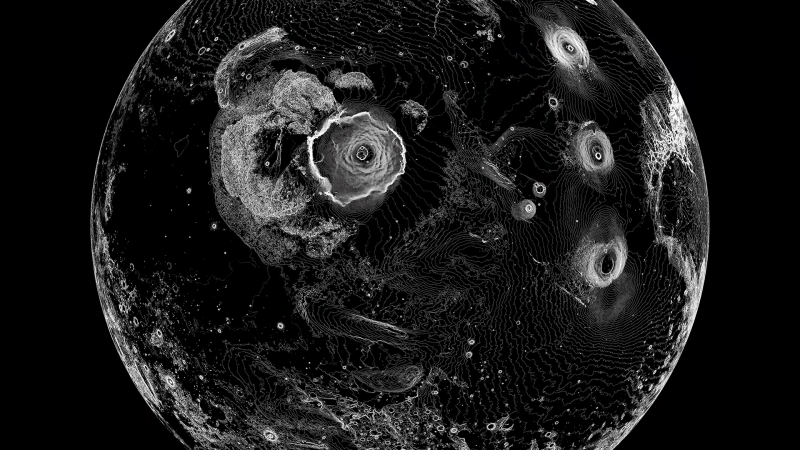
Image

Japan Launches Mission To Study Martian Moon

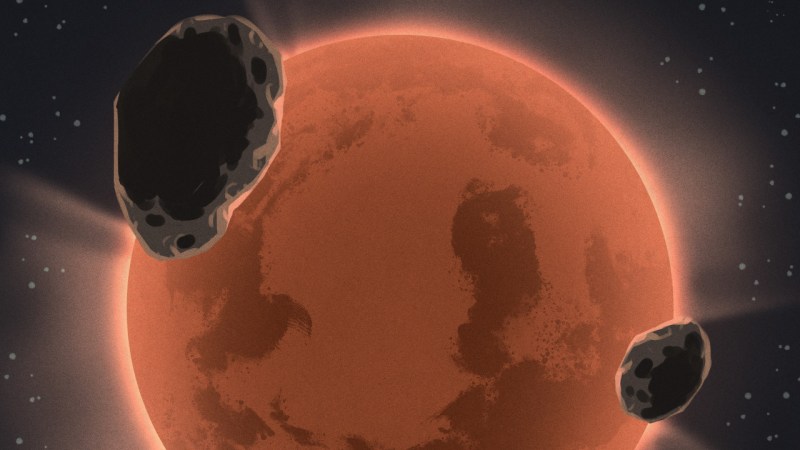
Humanity has been sending robotic explorers to Mars since the 1970s, and for our efforts we’ve been rewarded with not only incredible imagery of the Red Planet’s magnificent desolation, but a wealth of information about the alien world and how it’s changed over the last several billion years. But comparatively, we know almost nothing about the planet’s two moons, Phobos and Deimos. In fact, as recently as the 1960s, there were some scientists that believed the unusual shape, mass, and orbit of Phobos hinted at the possibility that it was no moon at all, and was in actuality a derelict spacecraft of some type.

Image
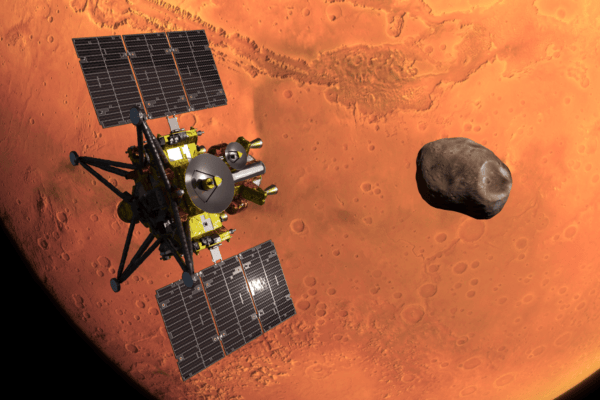
Martian Moons eXploration Spacecraft

Once the first Viking probes arrived at Mars, we had the photographic evidence and up-close measurements to prove that Phobos wasn’t artificial. But even today, we still don’t know exactly what it is. The data suggests that it’s not solid rock, and that large voids may be hiding under its surface. While we can be fairly sure there won’t be any mummified remains of Martian astronauts to be found within Phobos, vast deposits of ice are a tantalizing possibility.

With the launch of the Martian Moons eXploration (MMX) mission earlier this week, the Japan Aerospace Exploration Agency (JAXA) hopes to bring us one step closer to understanding the formation and structure of Phobos. Should everything go to plan, MMX will deploy a small rover to its tenuous surface in 2029, and by 2031, a sample return capsule will bring pieces of the mysterious moon back to Earth for further study.

Continue reading “Japan Launches Mission To Study Martian Moon” →
Image

NASA’s Lunar Grounding Challenge Is A Real Buzz

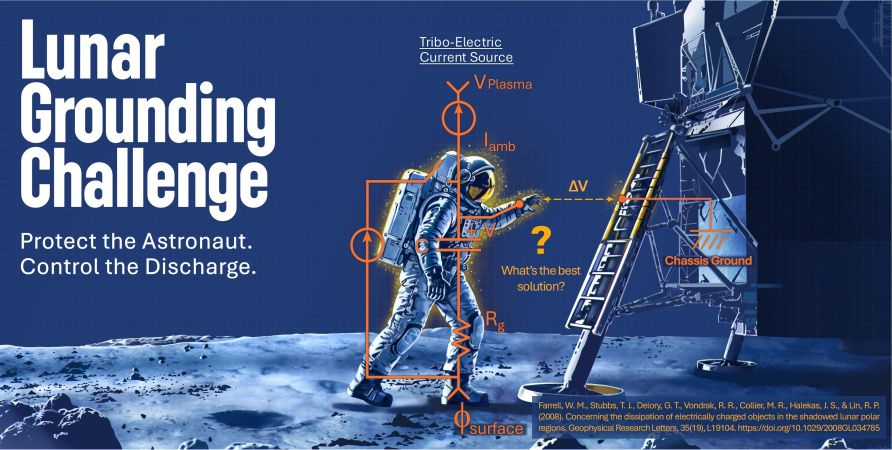
One could make a joke about how an astronaut walking on the lunar surface is rather akin to a cat walking on the carpet in the living room, but out in space the resulting triboelectric discharge can do a lot more damage than just some stinging fingers and a bemused looking cat.

The problem that NASA and other space agencies are dealing with is that the charge that builds up on a lunar-walking astronaut is very hard to equalize with something like a lunar lander. For this reason they have now set up the Lunar Grounding Challenge to consult the public whilst dangling $150,000 of rewards in front of anyone ready to pounce with a good idea.

Here on Earth we have many ways in which we can get rid of unwanted charge: dry winter weather, for instance, demonstrates effectively that humidity is a crucial factor here. With no real atmosphere on the Moon, each astronaut becomes a walking capacitor, which is worsened when said astronaut ventures outside of the sunlit areas and then returns to the slightly positively charged lander.

The challenge here is to equalize the astronaut and lander, with a design specification of a -100 kV or higher astronaut and about 100 V lander. A resulting current should not exceed 1 mA, ideally less than 0.2 mA to remain below human perception levels. If an arc exists it should not contact the suit or astronaut.

Of course, the most low-tech solution would be to use a resistor to limit the current, but at those voltage ranges it would take an awful long time to bleed off, in an environment that’s basically a perfect insulator. It definitely seems like a fun challenge to sink one’s fangs into.

A shiny, silver vehicle with tools on a mesh rack on the back half and a large open cab up front drives across a grassy field under blue, partly cloudy skies. A person in a black shirt stands in the background with a drone hovering above their head. Two women in white helmets are piloting the vehicle from the cab.

Driving On The Moon At A Blistering 11.6 MPH

As NASA continues humanity’s slow march back to the Moon, different pieces of the puzzle of establishing a more permanent base there are falling into place. One of these pieces is the the Lunar Terrain Vehicle (LTR), and [Cleo Abram] and [Michelle Khare] got a look at the LTR candidate from Lunar Outpost.

Designed to help astronauts traverse the lunar surface as well as function as a semi-autonomous rover when uncrewed, the LTR will be an integral part to any future Moon base. NASA announced earlier this year that it would be moving forward with the LTR featured in this video and another from competitor Astrolab. Regardless of manufacturer, the LTR will have to deal with some wild conditions in the lunar environment.

Lunar dust is abrasive, so the LTR generates an electric current to pull the dust under the truck to prevent it from entering the cab of the vehicle as it moves along. Given the extreme temperature swings on the moon (-200˚C to 200˚C), the space truck will also be fitted with wire mesh tires as nobody wants to be changing a flat in space. The two seats in the cab are oversized and can help lift the astronauts up as space suits hamper their agility to a significant degree. There are compartments for storing samples, and the truck has a robot arm that can grab samples to bring back if no one is along for the ride.

We’ve still got a few years before crews arrive on the moon, but when they do, there’s a good chance they’ll be using the LTR to explore the lunar south pole in hopes of water.

Continue reading “Driving On The Moon At A Blistering 11.6 MPH” →

Image

The New Phobos Martian Moon Rover That Weighs In At Only 15 Grams

Although for many decades the planet Mars has been prodded, poked, driven upon, flown over and especially orbited by various spacecraft, landers and rovers sent over by a certain humanoid species on Earth, the two moons that orbit Mars have featured significantly more in science-fiction and video games than in scientific literature. This is now about to change when the Martian Moons eXploration (MMX) mission launches on October 19th, which will include a sample return from Phobos.

So far these two moons of Mars – Phobos and Deimos – have only received a few cursory glances by passing spacecraft, leaving many fundamental questions surrounding their formation and composition very much open. With the MMX mission this should change dramatically, with this spacecraft intended to perform detailed measurements of both moons.

In addition a rover – called Idefix – will perform a landing on Phobos for observations of its surface. This will be quite a feat as despite this lander coming in at 25 kg, on Phobos’ surface it will weigh only 15 grams due to the low gravity, or even less than the diminutive dog companion of Obelix, with potential bouncing as we have seen with previous landing attempts on such small bodies.

After launch, the MMX mission will take a year to arrive at Mars, in August of 2027, with Idefix being released in early 2029 for its hopefully soft paws-down on the surface of Phobos where it can scurry about for a while until the main MMX spacecraft lands later for its sample retrieval and return part of the mission. If everything goes well, this would mean that a sample of Phobos should be landing in Australia in 2031.


Image

Mars Pathfinder: What Really Happened?

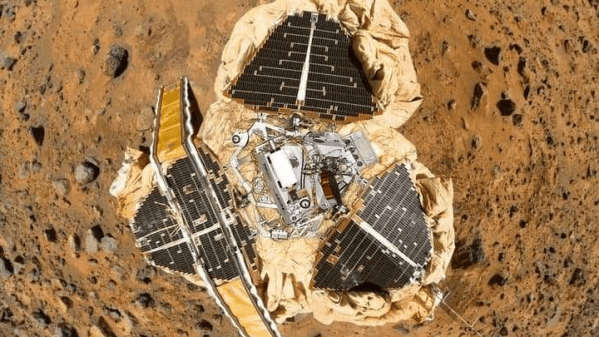
You’ve probably heard of Mars Pathfinder, the NASA lander and its Sojourner rover that took up residence on Mars in 1997. At first, all was well, but after a few days, the lander suffered a series of total system resets. A watchdog timer detected a problem and forced reboots. [Vivek Bhageria’s] recent post looks into what happened and the eventual solution.

The root cause was priority inversion. This happens when a lower-priority task holds a resource needed by a higher-priority task and prevents the higher-priority task from executing. In this case, the operating system was VxWorks, but this can happen on any kind of priority scheduling system.

The simplified version is that there were two tasks that each used the same mutex to avoid stepping on each other. The highest priority was a data distribution task. The lowest priority task dealt with meteorology data processing. There was also a medium-priority task that handled bus maintenance.

The failure would occur when the low-priority task had the mutex and lost its time slot before releasing it. The high-priority task would then find it couldn’t take the mutex. However, the low-priority task didn’t get control again because of the medium-priority tasks waiting to run.

In effect, the high-priority task was now waiting on something that couldn’t become available until the lowest-priority task was able to run. That’s priority inversion.

Continue reading “Mars Pathfinder: What Really Happened?” →

Image

Scientists Create Hexagonal Packed Ice At Extreme Pressures

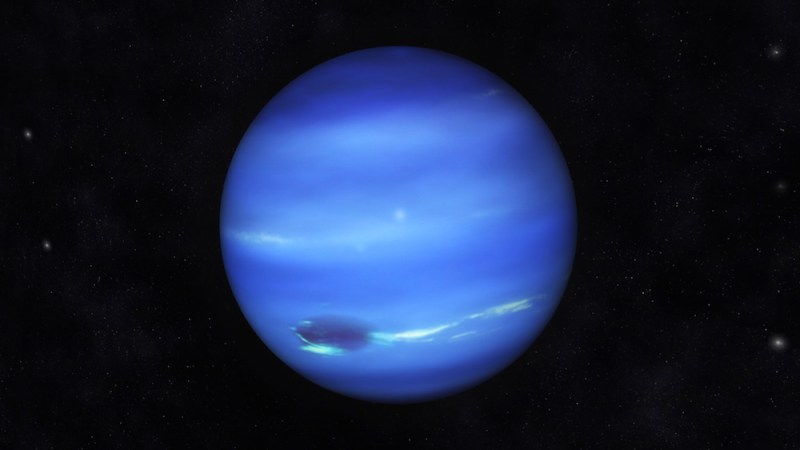
One of the problems with planetary science is that you generally cannot easily investigate the exact conditions in their interior, so you’re left to extrapolate what is happening inside them based on surface scans. One of the resulting questions is what ice giants like Neptune and Uranus in Earth’s solar system have exactly at their core. We do know that it is mostly rocks and ice, but what kind of ice you end up with at these intense pressures is a good question that [Alexis Forestier] et al. set out to answer, with their results published in a Physical Review Letter paper (ArXiv preprint).

Image

It’s noteworthy that there isn’t just water ice at these planetary cores, with this study only investigating water ice specifically. In order to get the water to the pressures it would experience courtesy of ice giant gravity, a diamond anvil was used, with synchrotron x-ray diffraction allowing for the changes to the sample to be observed.

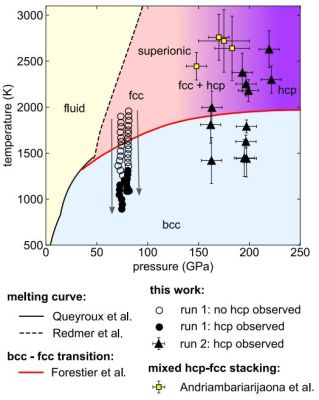
The phase diagram of water includes a number of phases beyond what us Earth-dwellers would call ‘ice’, with at higher pressures above about 80 GPa the formation of ice X, featuring a body-centered cubic (BCC) oxygen sublattice. Subsequent discovered phases were face-centered cubic (FCC) and now hexagonal close-packed (HCP) ice, all differing in the packing of the oxygen sublattice.

In addition to extreme pressures, temperatures also had to be increased by using the laser heating feature of the diamond anvil. At around 2,000K and over 200 GPa the HCP phase was found, with a mixed FCC-HCP phase at intermediate pressures.

Although not immediately providing answers to questions pertaining to the aforementioned ice giants, it gives planetary scientists yet another clue that they can use in future investigations, as well as provide more insight into this most fascinating phase of water that’s actually its own little galaxy of phases.

Image

The Big Moon Plot

When you look into the night sky, you can’t help but wish to bring the outer worlds to your doorstep. One of the best ways to do that is to photograph the Moon’s surface to display in a frame. However, [Sebastian Lague] found a simple image too lackluster compared to something with a bit more style, such as a plotted image of the lunar terrain.

Why plotting? Well, the Moon is not defined in the same way with contrasting colors as Earth is. The Moon is peppered with craters and differing elevations that separate regions, so why not build an entire DIY plotter from scratch? [Sebastian Lague] did exactly this with a custom algorithm to take the elevation maps and create vector drawings which are plotted on his custom plotter.

Continue reading “The Big Moon Plot” →