Quick Answer
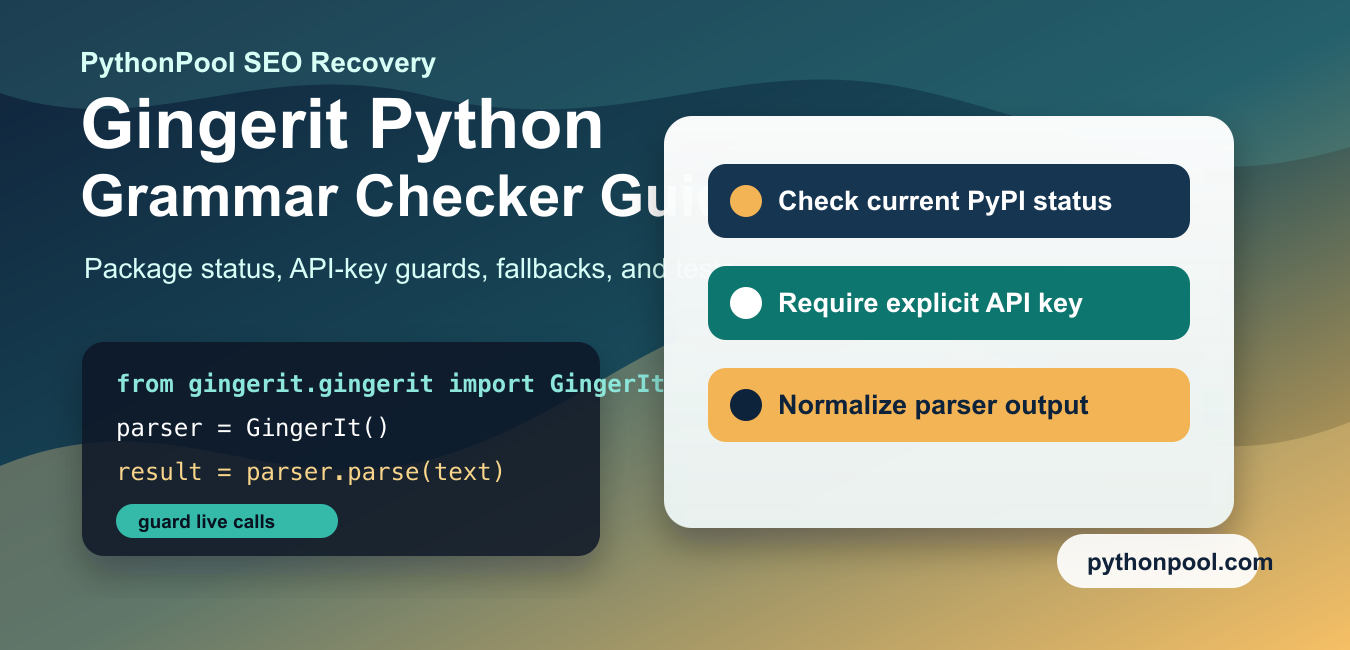
Older Gingerit examples use GingerIt().parse(text), but package and service availability can differ from those tutorials. Check what is installed, guard the optional import, keep API credentials outside source code, and test a fallback path before relying on live correction.

Gingerit is a Python-facing grammar correction client that older tutorials used for spelling and grammar fixes through Ginger Software. The important detail in 2026 is that the package name is not in the same shape those older tutorials describe. The current gingerit PyPI page lists version 0.0.0.1 as a security holding package and says the package is empty. That means a plain python -m pip install gingerit should not be treated as a working grammar checker today.
The original zerometal Gingerit repository documented from gingerit.gingerit import GingerIt and GingerIt().parse(text), but that code was built around an older Ginger Software endpoint. A later Azd325 Gingerit repository moved the client toward RapidAPI and notes that an API key named GINGER_IT_API_KEY is required. That repository is archived on GitHub, so treat it as reference code rather than a dependency you can blindly add to a production service.
This guide shows safe patterns for projects that still need to maintain Gingerit-style code: inspect what is installed, guard optional imports, skip live calls unless credentials are present, normalize the parse result, and keep tests independent from the external grammar service.
A safe migration plan keeps the public guidance useful without sending readers into an install path that no longer works. Explain the package status first, then show adapter code that fails quietly when the client is absent. That gives maintainers a way to preserve old examples while they decide whether to remove Gingerit, pin a reviewed fork, or replace it with a maintained grammar service.
Check What Is Installed
Start by checking the installed distribution before importing gingerit. This avoids confusing an empty security placeholder with the older grammar checker code.
from importlib.metadata import PackageNotFoundError, metadata, version

try:
    package_version = version("gingerit")
    package_meta = metadata("gingerit")
except PackageNotFoundError:
    print("gingerit is not installed in this interpreter")
else:
    print("version:", package_version)
    print("summary:", package_meta.get("Summary") or "no summary")
This check is deliberately separate from grammar correction. If the package is absent, your program can report a setup issue. If the package exists but has no useful package summary, review the installed files before assuming that GingerIt is available.
Guard The Optional Import
Any code that still supports Gingerit should treat it as optional. The maintained path may require a RapidAPI key, and many environments will not have the client installed at all.
import os

def load_gingerit_client():
    if not os.environ.get("GINGER_IT_API_KEY"):
        return None

    try:
        from gingerit.gingerit import GingerIt
    except ImportError:
        return None

    return GingerIt()

client = load_gingerit_client()
print("client ready:", client is not None)
The guard keeps application startup predictable. A missing grammar checker should not crash code paths that can use a fallback, and a missing API key should be visible before a live request is attempted.
Skip Live Calls By Default
Grammar correction depends on an external service. Keep that call behind an explicit switch so examples, tests, and scheduled jobs do not contact the service by accident.
import os

def correct_with_gingerit(text, parser):
    if parser is None:
        return {"text": text, "result": text, "corrections": [], "skipped": True}

    response = parser.parse(text)
    return {
        "text": response.get("text", text),
        "result": response.get("result", text),
        "corrections": response.get("corrections", []),
        "skipped": False,
    }

if os.environ.get("RUN_GINGERIT_DEMO") == "1":
    print("connect a real parser here")
else:
    report = correct_with_gingerit("The smelt of fliwers bring back memories.", None)
    print(report["result"])
The fallback returns the original text and an empty corrections list. That is easier for callers to handle than a random exception from import setup, credentials, network access, or a changed third-party response.
Normalize Correction Rows
Older Gingerit examples show a dictionary with text, result, and corrections. Do not spread that external shape across the whole project. Convert it to the small structure your application actually needs.
def summarize_corrections(report):
    rows = []
    for item in report.get("corrections", []):
        rows.append(
            {
                "original": item.get("text", ""),
                "replacement": item.get("correct", ""),
                "position": item.get("start"),
            }
        )
    return rows

sample = {
    "corrections": [
        {"start": 13, "text": "fliwers", "correct": "flowers"},
    ]
}

print(summarize_corrections(sample))
This adapter also gives you one place to handle missing keys, empty suggestions, and response changes. Keep the rest of the app focused on your own internal shape instead of the service response.
Batch Text Conservatively
External grammar APIs can have request size, rate, and billing limits. Even when a source does not document a precise limit, it is safer to send modest chunks and keep the original order.
import re

def sentence_batches(text, max_chars=280):
    sentences = [part.strip() for part in re.split(r"(?<=[.!?])\s+", text) if part.strip()]
    batch = []
    size = 0

    for sentence in sentences:
        next_size = size + len(sentence) + (1 if batch else 0)
        if batch and next_size > max_chars:
            yield " ".join(batch)
            batch = []
            size = 0
        batch.append(sentence)
        size += len(sentence) + (1 if batch else 0)

    if batch:
        yield " ".join(batch)

print(list(sentence_batches("This is short. This is another sentence.")))
Chunking is not a substitute for reading the provider terms. It is a defensive habit that makes retries, logging, and user-facing progress easier to reason about.
Test Without The Service
Most tests should not need a live Ginger endpoint. Use a fake parser to test how your code handles a successful correction and reserve a small opt-in integration test for the real service.
class FakeGingerIt:
    def parse(self, text):
        return {
            "text": text,
            "result": "The smell of flowers brings back memories.",
            "corrections": [
                {"start": 4, "text": "smelt", "correct": "smell"},
                {"start": 13, "text": "fliwers", "correct": "flowers"},
            ],
        }

def corrected_text(parser, text):
    return parser.parse(text).get("result", text)

print(corrected_text(FakeGingerIt(), "The smelt of fliwers bring back memories."))
The practical rule is to isolate Gingerit behind a small adapter. Check the installed package, require credentials before live calls, normalize the result, and keep tests offline by default. If you need grammar correction in a production product, compare this archived-client path with maintained alternatives and with any provider terms that apply to your use case.
Keep Grammar Correction Optional and Testable
A grammar service is an external dependency, not a replacement for your application’s input validation. Wrap the client behind a small adapter, normalize its result, and return the original text or a clear status when the package or service is unavailable.
def correct_text(text, parser=None):
    if parser is None:
        return {"text": text, "corrected": False}
    result = parser.parse(text)
    return {"text": result.get("result", text), "corrected": True}
This boundary makes unit tests deterministic and prevents a network failure from breaking unrelated application logic. Review the package source and service terms before deploying an old tutorial unchanged.
For related integration patterns, compare conditional imports in Python when an optional grammar package may be unavailable and Python requests with JSON when a correction service returns structured data.
Frequently Asked Questions
Does pip install gingerit always provide a working grammar checker?
No. Package status and the underlying service can change. Inspect the installed distribution and project documentation before assuming older GingerIt examples will work.
What is the classic Gingerit usage pattern?
Older examples commonly import GingerIt and call GingerIt().parse(text), but the client may depend on an external service or a legacy endpoint.
Should I put a grammar-service API key in the code?
No. Store credentials in environment variables or a secret manager, and keep the correction adapter separate from application business logic.
How should I test Gingerit-dependent code?
Use a fake parser or recorded response in unit tests. Test network availability and authentication separately so your test suite does not depend on a live external service.
