
Download Second Copy – Secure Backup Tool for Windows
Overview
Second Copy is a lightweight yet powerful backup utility designed specifically for Windows environments. First introduced in 2001, this trial‑version software has amassed more than 6,600 downloads and remains a favorite among users who need a reliable way to create duplicate copies of files and directories across a local network. The current release, version 7.1.0.3, was last updated on October 19 2007 and continues to run smoothly on legacy systems such as Windows 95 and later editions. Its modest footprint makes it an ideal choice for computers with limited storage space, and its simple interface ensures that both novice and experienced users can set up backups without a steep learning curve.
Second Copy belongs to the Security software category, with a subcategory of Security Backups. Although the program is no longer actively maintained, its core functionality—copying files securely over a LAN, preserving directory structures, and optionally deleting empty folders after a move—remains relevant for small offices, home labs, and users who still operate on older Windows platforms. The software is distributed in English and can be downloaded for free as a trial, allowing you to evaluate its performance before deciding on a purchase or an alternative solution.
Key Features of Second Copy
- Local network backup: Seamlessly copy files and folders between computers on the same LAN without the need for external drives.
- Selective copy modes: Choose between “Copy,” “Move,” and “Mirror” modes to match your workflow—whether you want to keep the original, relocate it, or keep two identical locations synchronized.
- Delete empty folders: After moving files, Second Copy can automatically remove any empty directories left behind, keeping the source drive tidy.
- Progress bar integration: The program now hides or shows the progress bar panel in sync with the toolbar, offering a cleaner interface when you need it.
- Low system resource usage: Designed to occupy minimal RAM and disk space, making it suitable for older machines and environments with constrained resources.
- Multi‑language support (English): The user interface and help files are fully translated into English, ensuring clear guidance throughout the backup process.
- Simple file filtering: Include or exclude files based on extensions, size, or date, giving you fine‑grained control over what gets copied.
- Batch operation support: Save multiple backup jobs as scripts and run them automatically, which is handy for repetitive tasks.
Installation & Usage Guide
Downloading the Installer
The first step is to obtain the installer from a reputable source. Because Second Copy is an older program, it is often hosted on legacy software archives. Ensure you download the SecondCopy_7.1.0.3.exe file from a trusted site, verify the checksum if provided, and store it in a temporary folder on your Windows machine.
Step‑by‑Step Installation
1. Run the installer: Double‑click the downloaded .exe file. Windows may display a security warning; click Run to continue.
2. Accept the license agreement: Read the short EULA and select “I accept the terms.”
3. Choose the installation folder: The default path is C:\Program Files\SecondCopy. You can change it if you have a preferred location.
4. Complete the setup: Click “Install,” wait a few seconds while the files are copied, then click “Finish.” The program will launch automatically, or you can start it from the Start menu.
5. Optional shortcuts: Create a desktop shortcut for quick access, especially useful if you plan to run backups frequently.
How to Perform a Backup
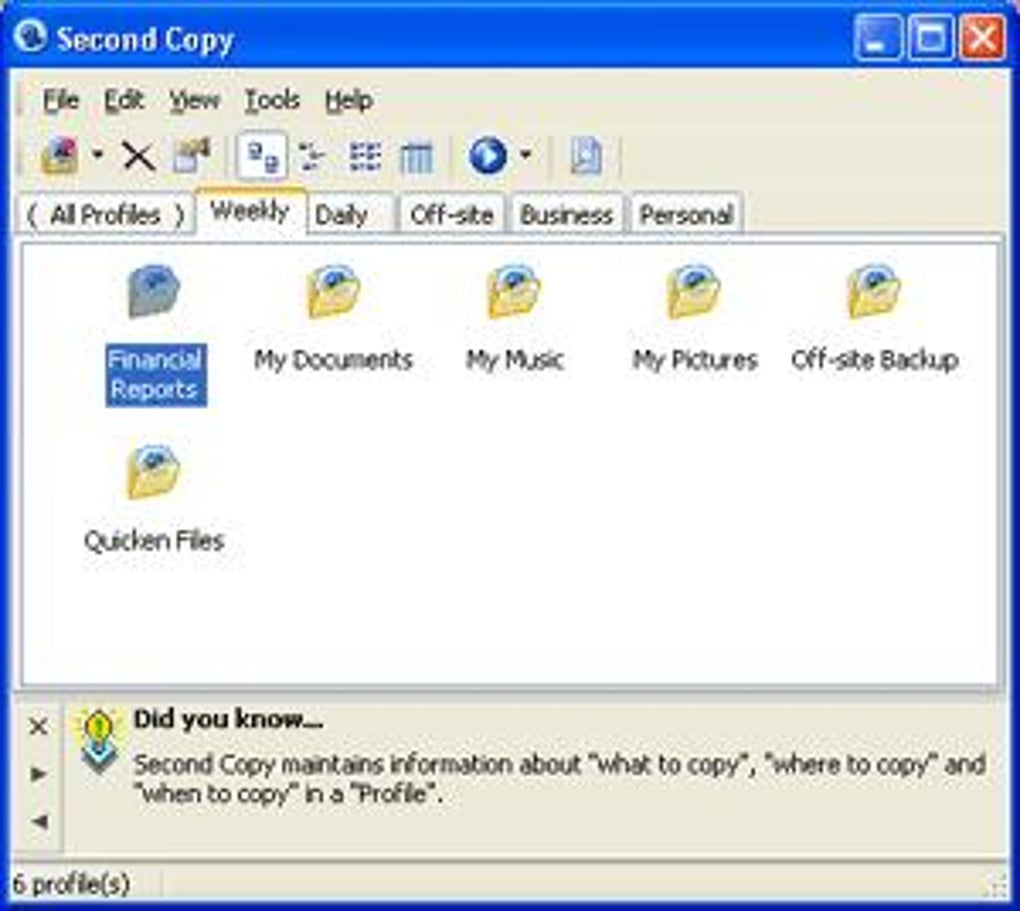
After launching Second Copy, you’ll see a clean window divided into three main panels: Source, Destination, and Options. To start a backup:
- Select the source folder: Click the “Browse” button under the Source panel and navigate to the directory you want to copy.
- Choose the destination: In the Destination panel, click “Browse” and select a shared folder on another computer within your LAN. Make sure the target machine has write permissions.
- Pick a copy mode: Choose “Copy” to keep the original files, “Move” to transfer them, or “Mirror” to keep both locations synchronized.
- Set additional options: Enable “Delete empty folders after copy” if you selected Move mode, and use the filter options to exclude unwanted file types.
- Start the operation: Click the “Start” button. The progress bar will appear (or hide, based on your toolbar settings) and display real‑time statistics such as files transferred, speed, and remaining time.
- Review the log: After completion, Second Copy provides a concise log that you can save for audit purposes.
The entire process typically takes only a few minutes for modest folder sizes, and because the program operates at a low level, it can handle large numbers of small files more efficiently than many modern cloud‑based backup tools.
Compatibility, Pros & Cons
Supported Operating Systems
- Windows 95
- Windows 98
- Windows ME
- Windows 2000
- Windows XP
- Windows Vista
- Windows 7 (basic functionality)
While Second Copy was originally built for Windows 95 and later, it continues to run on Windows 7 with limited features due to its legacy codebase. It does not support Windows 8, 10, or 11, nor does it have native versions for macOS, Linux, Android, or iOS.
Pros
- Very small installation size: Consumes less than 2 MB of disk space, making it perfect for older PCs.
- Fast LAN copying: Optimized for local network transfers, offering higher throughput than many generic file‑copy utilities.
- Simple interface: Minimalist design reduces the learning curve for users of any skill level.
- Free trial: Allows evaluation without a financial commitment.
- Legacy support: Still works on Windows 95/98, which is rare for modern backup tools.
Cons
- No official updates since 2007: Potential security vulnerabilities are not patched.
- Limited OS compatibility: Incompatible with Windows 10/11 and non‑Windows platforms.
- Trial version restrictions: Some advanced features are disabled until a license key is purchased.
- Lacks cloud integration: No support for modern cloud storage services such as OneDrive, Google Drive, or Dropbox.
- Basic error handling: Provides minimal feedback when network interruptions occur.
Frequently Asked Questions
Can I use Second Copy on Windows 10?
Second Copy was never officially updated for Windows 10, and while the program may launch, many features (especially the “Delete empty folders after copy” option) can behave unpredictably. For reliable backups on Windows 10, we recommend a more recent utility.
Is the trial version fully functional?
The trial version allows you to perform copy, move, and mirror operations, but it disables some advanced scheduling features and limits the number of simultaneous jobs. Purchasing a license unlocks the full feature set.
How does Second Copy handle network interruptions?
If a network drop occurs, Second Copy will pause the transfer and display an error message. You can manually resume the operation once the connection is restored, but the program does not automatically retry in the background.
Can I schedule automatic backups?
Scheduling is only available in the paid version. The trial version requires you to start each backup manually, which can be a limitation for users who need regular, unattended copying.
Is there any built‑in encryption for copied files?
Second Copy does not provide encryption during transfer. If you need encrypted backups, you should combine it with a file‑level encryption tool or use a more modern backup solution that includes TLS/SSL support.
Conclusion & Call to Action
Second Copy remains a solid, no‑frills backup utility for users who operate on legacy Windows systems or need a fast, low‑resource solution for LAN‑based file duplication. Its straightforward interface, tiny footprint, and free trial make it an attractive option for small offices, home labs, and anyone who still runs Windows 95 through Windows 7. However, the lack of recent updates, limited OS support, and absence of cloud features mean that it may not meet the expectations of modern enterprises or users on newer platforms.
If your environment matches the software’s sweet spot—namely, a Windows‑based network with modest backup needs—download Second Copy today, test the trial, and decide whether the simplicity outweighs the missing modern bells and whistles. For those requiring advanced scheduling, encryption, or cross‑platform compatibility, consider evaluating contemporary alternatives alongside Second Copy.