Presented by Michael Pratt, With the George Washington Textile Museum, this was a survey of hats of his own collection and others, from several centuries ago to present day make. These are from the Silk Road from China and Tibet to Syria, including Turkmenistan, Anatolia, Azerbaijan, Iran, referred to in context as Persia.
He also read poetry fitting the context, of 15th century Rumi, Hafez and others, up to a modern poet writing sadly about the destruction of the old town of Aleppo a few years ago. It was a great reminder of the importance of writing, and the related art of calligraphy in the culture.
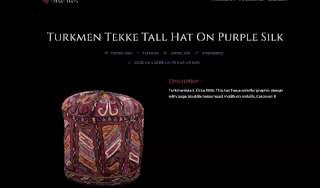
This is a familiar shape, to knitters, for a child's hat
The feathers on this marriage hat represent fertility. Reminds me of native American design that we looked at a few weeks ago.
Doesn't this look a lot like Fair Isle knitting?
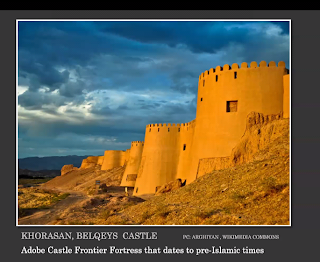
This is a pre Islamic fortification against the Islamic movement, to which it eventually gave way.
A yurt, we've seen these being made in India, too. There's a school of thought that says women originally created them. See also native American houses. Circular form for stability and weatherproofing. Early domestic architects.
This is another bridal hat with symbolic additions and decorations wishing fertility and long life.
This is where we note the poet amd mystic's place of importance in the culture, as both a spiritual and artistic leader.
Sayings and poetry appear in the hat design, Arabic script.
This is a felted piece with calligraphy designed into it.
Look, rondels! We know these now.
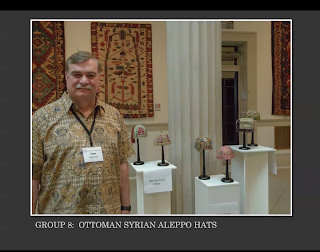
The presenter
And here's my foremost love in embroidery: couched goldwork
This is the old city of Aleppo, destroyed shortly after this image in a terrible war
Nineteenth century well to do residents of old Aleppo
After I saw this I got an urge to make a many-parted hat, just for the geometry of it.
Here's a celebration of the solstice, modern, seasonal note
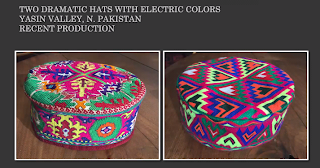
Clearly modern make, neon colors!
Chinese woman's straw hat
Wedding hats again
The baby hats are decorated with charms and other items which look pretty and I expect the baby liked them, but they're more seriously meant to ward off evil.
Look at the lining in this hat, great design idea.
And here are the people who presented. The man bottom left, very handsome, was behind the scenes putting up the slides, and I was very glad he was credited. Complicated job working with multiple slides, screen sharing, with a willing but less techy collector.
The reason a lot of these centuries old hats are so well preserved is that they were ceremonial, and treasured as artworks, to be passed down. Not workday hats which probably got worn out.
And here's a fragment of Rumi to go out on, written centuries ago:
Today, like every other day
We wake up
Empty and frightened
Take up a musical instrument.
His faith that art will save us all resonates today. It's definitely been keeping my little boat afloat.
Happy Sunday everyone!