- For affinity in multiplayer, see Pack Rally.
Affinity (or Pack Affinity) refers to the blue bar seen in the Wolf Badge.
In WolfQuest: Anniversary Edition, Affinity is represented by the blue meter running vertically along the outer curve on the left side of the player's Wolf Badge. Gained affinity is visually represented with a brief explosion of  icons overhead, while lost affinity has no overworld effects. Pack affinity is an indication of the pack's family bond with each another.
Initially, the affinity meter will be absent and goes unused when the player-wolf begins their quest and roams as a lone dispersal for the duration of the Learn to Hunt mission. It remains inactive until the player has completed the Find a Mate mission. Dispersal wolves or group of dispersals appear throughout the wilderness from the beginning of the game, however they will not exhibit any interest in courtship until the player's wolf is a sufficiently experienced hunter. After they have courted and joined the player-wolf as their trial mate, affinity becomes known as Pack Affinity. If the player-wolf's mate dies and they have no offspring, affinity dissipates completely and will be reset ready for the next courtship attempt. As of 2.0.0, this only applies if it is still breeding season, otherwise the player-wolf be forced to survive alone if it has passed to wait until next fall. Alternatively, they may start a new game.
Pack affinity will slowly decay over time, so the player must periodically socialise, hunt with, or eat with their partner in order to maintain it. If affinity reaches 0% with a trial mate, the mate will reject and disown the player-wolf and leaves with immediate effect. Nothing will happen if a permanent mate drops to 0% affinity, even after an extended period of time.
After pups are born, the affinity meter gains a threshold representative of the pups' tolerance or obedience. If pack affinity falls below the threshold marked by a gold arrow within the meter itself, pups may grow bored and will have more incentive to leave the safety of shelter if left home alone. Low affinity will also further influence the mate's behavior and willingness to engage with the player-wolf or some activities. If the player-wolf's mate dies midway through raising offspring or with a previous year's offspring in tow, pack affinity is capped at 75% until a new mate joins the pack and, due to there being no breeding partner, the player will be forced into Survive With Family if they do not replace their mate by finding a new partner in time for the next breeding season.


In WolfQuest: Classic, Affinity works more or less the same as it did in Legacy versions. It is represented in the blue meter on the Wolf Badge during the second episode. Little has changed. It is absent during the first episode and present only during the second episode, and will determine whether or not the pups stay close to the den.
Feeding, howling in full, carrying and depositing pups near the den, and interacting with offspring via emotes will increase overall affinity.
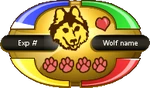
In Legacy versions of WolfQuest, Pack Affinity is represented by the blue bar on the Wolf Badge.
During Survival of the Pack, it is the focus of mission two and increments as you make progress in training your pups to stay within the vicinity of your selected territory; feeding, carrying and depositing pups close to the den, and howling in full will also raise overall affinity.
Affinity is not to be confused with the yellow bar, which indicates the strength of territorial claim.
Pack Affinity is a requirement for completing the Train your Pups mission, though the player will still benefit if they continue their efforts to to maintain this meter. It's worth noting that the higher pack affinity is, the closer to home the pups will stay versus wandering farther away to become easier targets for trespassing predators. During the final mission, higher affinity will determine how close the pups stay to their parents en route to the rendezvous site.[1]
Saga[]
In the Anniversary Edition, the Saga is bigger and better than episodes, and has essentially replaced them with a modernised format allowing the player to experience them in any modern game map of their choosing, barring migration to and from Lost River. Overall there is room for the player-wolf to do as they please on their own, with their mate or with their pack to some extent while also progressing the chapter at their leisure. It is designed for repetition and replayability, all with the goal of growing the pack year after year until the end of the breeding wolf's life.
Affinity gain in the saga is changed somewhat.
- Eating carcasses with packmates gains affinity.
- Playing with pups and socializing with packmates gains affinity.
Episodes[]
Episodes are a rigid form of storytelling present only during the early years of Anniversary Edition, and present across all Classic and Legacy versions of the game. They lay out the basic campaign of the game that the player is expected to follow, mission by mission, until they reach the end where the story concludes.
Episode 1[]
 |
Historical content |
In the Anniversary Edition, the first episode was set in Amethyst Mountain up until ?.
Affinity is especially useful during the trial phase in that it displays progress towards completing the objective. When the bar is full, the trial dispersal will accept the player as their potential companion. Affinity gain is tied to hunting and successfully killing prey, with larger and more dangerous prey offering significantly better pay-outs, while losing affinity is possible by initiating activities and not participating, or leaving the mate to work entirely alone.
If the player accepts a trial dispersal, the player may name their new partner, and the pair will become mates for life. They may spend time hunting and exploring together in this location with no further objectives beyond survival, or they can go to the star marked on the world map and compass to migrate to the next episode.
If the player chooses to reject a trial dispersal, they must repeat the second mission to find and court another wolf until they are satisfied with their new mate. Wolves who were previously courted and rejected can show up again in future encounters so long as they haven't died, found an NPC mate, left the map or returned home, though their bonding meter will have reset. A mate will reject the player-wolf if affinity reaches 0% during their trial period.In Classic, the first episode is set in the Amethyst Mountain game map. Affinity represents the mate's bond with the player after completing the courtship phase. Bonded mates are permanent and will not leave the player post-courtship.
In Legacy versions, the first episode is set in the Amethyst Mountain game map. Affinity represents the mate's bond with the player after completing the courtship phase. Bonded mates are permanent and will not leave the player post-courtship.
Episode 2[]
|
Historical content
This section contains historical information. We request that it remains preserved.
|
In the Anniversary Edition, the second episode was set in the Slough Creek game map. Pack Affinity is utilised throughout the game and reflects pups' obedience to some extent.
The arrow in the affinity bar represents tolerance. This is dynamic and will increase or decrease over the course of the game. Tolerance is generally lower when the active difficulty is set higher. Tolerance also decreases while the pack is not settled and is travelling. Changes in flea load as well as the age of the pups also will affect tolerance. When affinity falls below the arrow's indicated threshold, pups will be tempted to leave shelter and explore their surroundings. Pups who wander too far may trigger the lost pup event.
Affinity gain is further influenced through positive interaction and socialisation with the pups, feeding them, and spending time at the den or rendezvous site, in addition to successful hunts. It decreases if negative or aggressive interactions are used, such as growling, as well as declining slowly over time while away from their den or rendezvous site or not interacting. If the player sleeps while away from unattended pups, the accelerated time will cause pack affinity to drop much faster. The player will be forcibly awoken after affinity has fallen below the tolerance threshold, and they will be unable to sleep again without returning home to check in on their packmates. Leaving a mate together with pups at the den or site will not decrease affinity at all while sleeping, and will allow the player to do so below the threshold. High affinity enables the player to go on excursions for longer periods of time without having to worry about pups' safety, while prolonging time spent elsewhere at low affinity increases the odds of pups leaving the safety of available shelter.
In Classic, the second episode is set in the Slough Creek game map. Affinity is now Pack Affinity and represents both the mate and all pups.
Affinity gain is further influenced through interaction and socialisation with the pups as well as feeding them.
In Legacy versions, the second episode is set in the Slough Creek game map. Affinity is now Pack Affinity and represents both the mate and all pups.
Affinity gain is further influenced through interaction and socialisation with the pups as well as feeding them.
Lost River[]
In the Anniversary Edition, there are two Lost River maps.
Lost River (Anniversary Edition)
 |
This article documents add-on content distributed via computer DLC and mobile in-app purchases.
This is paid content. |
In the expanded Lost River, affinity works much like the format used in episodes and completely is dependent on the player's progress. Alone, there is none; with a mate, affinity controls whether the mate will stay with the player-wolf; with pups, it controls whether pups will remain hidden while the adults are away from the active home site.
Lost River (Classic)
In the classic Lost River map, affinity works much in the same way as it does in the Amethyst Mountain episode, albeit with no way to migrate from this location after completing the trial period. No pups will be born here, thus affinity is tied solely to the mate and their bond with the player-wolf.In Classic's original Lost River, affinity binds the player-wolf and their mate. They cannot raise a litter in this location, thus much like how it works in Amethyst, it serves little purpose.
In Legacy versions, Lost River does not exist.
Gallery[]
Anniversary Edition Gallery
Contributions for Affinity in the Anniversary Edition are welcome in this gallery!


Classic Gallery
Contributions for Affinity in Classic are welcome in this gallery!

Legacy Gallery
Contributions for Affinity in Legacy versions are welcome in this gallery!
Bugs[]
Anniversary Edition Bugs
- Should the player's first mate die, and the player seeks out and accepts a new mate, the second mate will not transfer to Slough Creek.
- This is likely an oversight with the family tree mechanics. The first accepted mate will always generate a family snapshot, while from the second accepted mate onwards, a family snapshot will not be generated.
- The only way around this is to start a new game and to extend the trial period for as long as necessary to determine whether or not that wolf is a suitable mate for the player. Only accept if the courted wolf fits your needs!
- This has since been addressed with the addition of a regenerate button in Pack Info to refresh the snapshot.
Classic Bugs
- If the player (with pups) howls and immediately moves left or right, they can spam the combo allowing for a instant affinity in under 5 seconds.
Legacy Bugs
- There was a bug (referenced in the cheats article in the "Versions 2.0.X - 2.5.X" tabber, documented under "Bypass pup training") that allowed players to spam the howl action to rapidly increase pack affinity, making it possible to quickly and easily bypass the Train your Pups mission. While it can still be abused in 2.5.1, this bug was fixed during 2.7's development and can no longer be abused in newer releases.
Trivia[]
Anniversary Edition Trivia
- From 1.0e up until 1.0.6, affinity gain was required to complete the trial mate phase. It served no further purpose beyond completion of the Find a Mate objective.
- It would not diminish if the player-wolf neglected to socialise and interact with their mate.
- As of 1.0.6, affinity is utilised for pups. At higher affinity, pups will be somewhat more obedient, though their overall obedience will also be determined based on their individual personalities.[citation needed]
- As of 1.0.7h2, affinity for the mate was changed. It will decay during the trial period (post-trial unknown) in Amethyst (Slough unknown), and before the pups are born after migrating to Slough Creek.
- At low affinity, the mate will eventually reject and leave the player.[citation needed] This change was made to make getting certain achievements possible, and was likely also done to give more purpose to maintaining affinity for an indefinite pupless partnership as is permanently the case in Lost River (Classic), and can be optionally true in all Yellowstone game worlds post-2.0.0.
- Feeding pups prior to version 1.0.7n did not help toward pack affinity.
Classic Trivia
Classic and Legacy Trivia
- Affinity gained during the first episode does not decay over time, nor does it have any influence on the mate.
Legacy Trivia
References & External Links[]
- ↑ Official game manual, citing from page 8:
• Pack Affinity (top left): how well-trained your pups are, and thus how close they stay to the den, or to you during the Journey mission.

| Anniversary Edition Saga | ||
|---|---|---|
| Wolf Packs | Wolves | Dispersal wolf • Predator wolf • Stranger wolf (packs, territories) |
| Player's Pack | ||
| Areas | Hexes (home) • Territory • Wedges | |
| Family | Mate • Offspring: Pups, Yearlings, Subadults, Adults (dispersers) | |
| Home Sites | Den Sites • Rendezvous Sites | |
| Modes |  Single-player • Multiplayer Single-player • Multiplayer
| |
| Objectives | Quests | Learn to Hunt • Find a Mate (courtship) • Explore Lost River • Establish Your Territory • Find a Den • Raise Pups • Journey to Summer Home • Loaf at Rendezvous Site • Growing Pups • Young Hunters • Survive |
| Subquests | Find a New Mate • Move to a New Den • Hunt Newborn Ungulates! • Livestock Ranches • Move to New Rendezvous Site | |
| Exploration | Miscellaneous | Achievements • Collectibles • Easter Eggs • Human Influences • Landmarks • Pup XP |
| Episodes | ||||
|---|---|---|---|---|
| Gray Wolf | Yellowstone | Episode 1 • Episode 2 | ||
| Non-Episodic | Lost River (Modern, Classic) | |||
| Multiplayer | Pack Life • Raise Pups | |||
| Objectives | Quests • Subquests | |||
| Survival | ||
|---|---|---|
| Vitals & Senses | Health (disease, injury) • Energy or Stamina (rest) • Hunger (sustenance) • Wakefulness (sleep) • Scents (view, spores, posts) • Wolf Badge | |
| Skills & Stats | Affinity • Attributes • Commands • Experience (elder, perks, ranks) • Hunting (scavenging) • Personality | |
| Game Modes | Campaign • Single-player • Multiplayer • Ironwolf | |
| Sustenance | Carcasses • Hydration | |
| Territory | Den sites • Pack (territory) • Rendezvous sites • Wolves • Wolf Packs • Wolf territories | |
| Environment | Time • Vegetation • Weather | |
| Interfaces | Compass • Heads-Up Display • Map (world map) • Pack Info • Pack Stats • Tutorial | |

