My Mirror column:
Dangal grapples with wrestling’s tradition of masculinity — and Indianness.
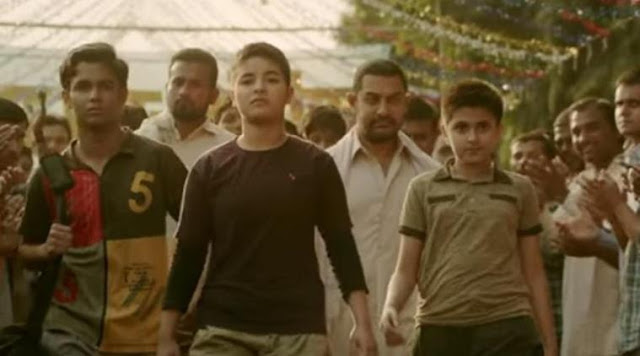
On the simplest level, the tale told in Dangal is an inspiring, heartfelt one — of women entering an arena traditionally reserved for men and not just surviving but making a mark. The two young women whose journey the film tracks — Gita Phogat and Babita Kumari — are a beacon not just of bodily discipline, but of the struggle against mindsets. Their lives are a window through which we catch a glimpse of a possible new world: the world as it might look if girls in North India were treated the same as boys.
At another level, though, Nitesh Tiwari’s film (not unlike Ali Abbas Zafar’s Salman-Khan-starrer Sultan earlier this year) is a carefully calibrated engagement with masculinity, femininity and nationalism (not necessarily in that order). And it is no coincidence, it seems to me, that the chosen site of that engagement is wrestling.
With links to royal patronage and feudal elite sponsorship, writes the anthropologist Joseph S. Alter in his study of wrestling culture in North India, wrestling has a long history in this part of the world. And although wrestlers earn prize money at the regional, state and national levels, it is not the professional sporting academies but the informal local akharas — public institutions often run on gifts, neighbourhood chanda collection and charitable donations — that feed the widespread popular interest in wrestling.
Both the wrestling films I am speaking of have taken on board the sport’s in-between, possibly ambivalent status —as something local and deep-rooted and organically Indian, but also tragically undervalued by the very national custodians of sport who should be propping it up. In both the fictional (Sultan) and non-fictional (Dangal) narrative, of course, the assumption is that this indigenous sporting tradition will finally acquire value by being showcased on the world stage.
Onwards to masculinity. “Wrestling in India (pahalwani) is a sport engaged in exclusively by men who are extremely concerned with the nature of their masculinity,” writes Alter. Any woman who has ever tried to enter an akhara (a gymnasium in which pahalwans practice) knows that it is well-nigh impossible to be allowed in, even just to watch. Just last July, at a small but reputed akhara in Shivajinagar in Bangalore, I was curtly told to stand outside, while my male companion — as much of an outsider there as I was — traipsed happily in. (Dangal’s titling images of real-life young wrestlers — large, serious-faced boys in langots — are thus a rare equal-opportunity sight.)
The point, however, is that keeping women out of the akhara is not just a regular form of gender injustice; it is entwined with traditional beliefs that have shaped wrestling in the subcontinent. This is a culture of masculine excess, simultaneously bombastic and threatened, driven by an obsession with celibacy, disciplined self-control and the retention of semen — all only achievable by steering clear of the poisonous temptations represented by women. As one old pahalwan says to Aamir Khan’s Mahavir Singh Phogat when he seeks training at the akhara for his daughters, “Is umar mein paap karvaayega ke?” The ideological links with certain traditions of Hindu asceticism should be clear.
Less obvious — but more fascinating — is how wrestling is seen by its practitioners as a form of self-perfection in the service of the nation, and the way that self-construction might connect to Gandhi’s pushing of the celibacy ideal as part of nation-building.
So it should not surprise us that in what is arguably the most bombastically hypernationalist year independent India has yet seen, the Hindi film industry has given us not one but two films about wrestling. What’s interesting is that both Sultan and Dangal chose to engage with the figure of the female wrestler, rather a rare species in real life. In both, the women bear the burden of their father’s ambitions — and they come out shining, so long as they keep their sexuality at bay.
In Sultan, the educated daughter (Anushka Sharma) returns to the village to represent her father’s akhara and increase its status; she does very well in her appointed task, until love, marriage, and an ill-timed pregnancy comes in the way of her winning a world title. In Dangal’s retelling of the Phogat sisters’ lives, it is their ex-wrestler father Mahavir who makes the decision for them. Among the most emotive scenes in the film’s first half is the way the girls are coaxed and coached out of girly-ness. In what feels like a radical role reversal for a man who is otherwise a standard-issue rural Haryanvi father with traditional expectations for women, Mahavir practically forces his daughters to wear shirts and shorts, wakes them up at five every morning for a gruelling fitness routine, and in a gutwrenching scene, has the barber chop off their hair.
The plot of Dangal’s second half, in fact, turns on Gita’s becoming distracted from her appointed purpose in the world — wrestling — by relaxing into the ordinary femininity that was wrested from her as a child. Growing her hair, watching romantic Bollywood films, and generally acquiring a consciousness of herself as a woman is apparently enough to make her lose her edge as a wrestler.
Perhaps it would be incorrect to call Dangal a defense of celibacy, but certainly its deep suspicion of femininity owes something to wrestling’s particular history of (un)sexuality.
Published in Mumbai Mirror, 25 Dec 2016.
Dangal grapples with wrestling’s tradition of masculinity — and Indianness.

On the simplest level, the tale told in Dangal is an inspiring, heartfelt one — of women entering an arena traditionally reserved for men and not just surviving but making a mark. The two young women whose journey the film tracks — Gita Phogat and Babita Kumari — are a beacon not just of bodily discipline, but of the struggle against mindsets. Their lives are a window through which we catch a glimpse of a possible new world: the world as it might look if girls in North India were treated the same as boys.
At another level, though, Nitesh Tiwari’s film (not unlike Ali Abbas Zafar’s Salman-Khan-starrer Sultan earlier this year) is a carefully calibrated engagement with masculinity, femininity and nationalism (not necessarily in that order). And it is no coincidence, it seems to me, that the chosen site of that engagement is wrestling.
With links to royal patronage and feudal elite sponsorship, writes the anthropologist Joseph S. Alter in his study of wrestling culture in North India, wrestling has a long history in this part of the world. And although wrestlers earn prize money at the regional, state and national levels, it is not the professional sporting academies but the informal local akharas — public institutions often run on gifts, neighbourhood chanda collection and charitable donations — that feed the widespread popular interest in wrestling.
Both the wrestling films I am speaking of have taken on board the sport’s in-between, possibly ambivalent status —as something local and deep-rooted and organically Indian, but also tragically undervalued by the very national custodians of sport who should be propping it up. In both the fictional (Sultan) and non-fictional (Dangal) narrative, of course, the assumption is that this indigenous sporting tradition will finally acquire value by being showcased on the world stage.
Onwards to masculinity. “Wrestling in India (pahalwani) is a sport engaged in exclusively by men who are extremely concerned with the nature of their masculinity,” writes Alter. Any woman who has ever tried to enter an akhara (a gymnasium in which pahalwans practice) knows that it is well-nigh impossible to be allowed in, even just to watch. Just last July, at a small but reputed akhara in Shivajinagar in Bangalore, I was curtly told to stand outside, while my male companion — as much of an outsider there as I was — traipsed happily in. (Dangal’s titling images of real-life young wrestlers — large, serious-faced boys in langots — are thus a rare equal-opportunity sight.)
The point, however, is that keeping women out of the akhara is not just a regular form of gender injustice; it is entwined with traditional beliefs that have shaped wrestling in the subcontinent. This is a culture of masculine excess, simultaneously bombastic and threatened, driven by an obsession with celibacy, disciplined self-control and the retention of semen — all only achievable by steering clear of the poisonous temptations represented by women. As one old pahalwan says to Aamir Khan’s Mahavir Singh Phogat when he seeks training at the akhara for his daughters, “Is umar mein paap karvaayega ke?” The ideological links with certain traditions of Hindu asceticism should be clear.
Less obvious — but more fascinating — is how wrestling is seen by its practitioners as a form of self-perfection in the service of the nation, and the way that self-construction might connect to Gandhi’s pushing of the celibacy ideal as part of nation-building.
So it should not surprise us that in what is arguably the most bombastically hypernationalist year independent India has yet seen, the Hindi film industry has given us not one but two films about wrestling. What’s interesting is that both Sultan and Dangal chose to engage with the figure of the female wrestler, rather a rare species in real life. In both, the women bear the burden of their father’s ambitions — and they come out shining, so long as they keep their sexuality at bay.
In Sultan, the educated daughter (Anushka Sharma) returns to the village to represent her father’s akhara and increase its status; she does very well in her appointed task, until love, marriage, and an ill-timed pregnancy comes in the way of her winning a world title. In Dangal’s retelling of the Phogat sisters’ lives, it is their ex-wrestler father Mahavir who makes the decision for them. Among the most emotive scenes in the film’s first half is the way the girls are coaxed and coached out of girly-ness. In what feels like a radical role reversal for a man who is otherwise a standard-issue rural Haryanvi father with traditional expectations for women, Mahavir practically forces his daughters to wear shirts and shorts, wakes them up at five every morning for a gruelling fitness routine, and in a gutwrenching scene, has the barber chop off their hair.
The plot of Dangal’s second half, in fact, turns on Gita’s becoming distracted from her appointed purpose in the world — wrestling — by relaxing into the ordinary femininity that was wrested from her as a child. Growing her hair, watching romantic Bollywood films, and generally acquiring a consciousness of herself as a woman is apparently enough to make her lose her edge as a wrestler.
Perhaps it would be incorrect to call Dangal a defense of celibacy, but certainly its deep suspicion of femininity owes something to wrestling’s particular history of (un)sexuality.
Published in Mumbai Mirror, 25 Dec 2016.


