Contact Sales & After-Sales Service

Contact & Quotation

  • Inquire: Call 0086-755-23203480, or reach out via the form below/your sales contact to discuss our design, manufacturing, and assembly capabilities.
  • Quote: Email your PCB files to [email protected] (Preferred for large files) or submit online. We will contact you promptly. Please ensure your email is correct.
Drag & Drop Files, Choose Files to Upload You can upload up to 3 files.

Notes:
For PCB fabrication, we require PCB design file in Gerber RS-274X format (most preferred), *.PCB/DDB (Protel, inform your program version) format or *.BRD (Eagle) format. For PCB assembly, we require PCB design file in above mentioned format, drilling file and BOM. Click to download BOM template To avoid file missing, please include all files into one folder and compress it into .zip or .rar format.

PCB Manufacturing / Via Covering
PCBSync · PCB special-process engineering

Via Covering: choose tenting, plugging, filling or capping

Match the via treatment to soldering, electrical isolation and surface requirements. Build a clear project brief and request review of the actual via map.

Specify the required via condition by location instead of applying one treatment indiscriminately. Where a via lies inside a component pad, coordinate the finished surface with the assembly interface and inspection requirement. See via-in-pad construction for the related requirements.

Prototype through production · scope and schedule confirmed after file review

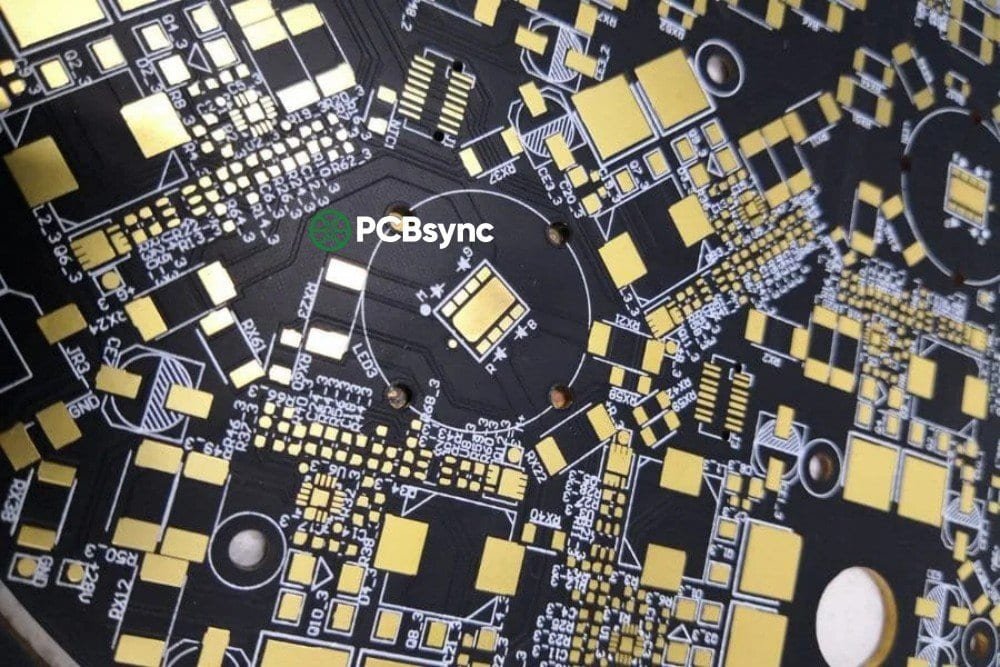
Dark circuit boards with repeated gold-colored pad arrays.
At a glance: Via covering describes several different surface and cavity treatments. The right drawing states what must be covered, filled or capped, on which side and for what assembly purpose.
Prepare a clearer project request

Via Covering tools

Via Covering workbench

PCBSync Engineering Tools · no account required · calculations run in your browser

Mark what you have prepared

Match the scope to the decision

Via Covering: scope, limitations and evidence

Decision / stageWhat to defineEvidence or next action
TentedMask spans the via openingSpecify the affected side and closure expectation
PluggedMaterial obstructs the opening; full fill is not impliedState the required location and depth outcome
FilledMaterial occupies the specified cavityDefine material, void and surface requirements
Filled and coveredFill plus a covering layerIdentify the cover material and side
Filled and cappedFill with a metallic cap for the specified surfaceAgree cap construction, planarity and solderable finish
Practical engineering and purchasing guidance

Design the process around the real requirement

Start with the problem at the via

An exposed opening near a solder land can interact with paste and solder during assembly. A via outside that area may instead need protection from accidental contact or a defined mask surface. Identify the problem before selecting a process.

Consider test access and component holes separately. Blanket instructions to close every hole can remove intentional electrical access or interfere with the insertion of leads and hardware.

Compare the finished outcomes

Tenting closes an opening with mask, while plugging and filling describe material placed in the cavity. A copper cap is a separate metallic surface and should be called out when that surface is required.

A short order-form label may combine several operations. Confirm the supplier interpretation in the engineering drawing, especially for filled vias located directly in solderable SMD lands.

Use package guidance for vias in lands

Check the exact device land pattern, thermal-pad instructions, paste design and assembly route. Requirements for one package should not be generalized to all BGAs or exposed-pad components.

Where a planar solderable land is needed, review filling, planarization and capping as a complete construction. Where open thermal vias are allowed, confirm the paste and solder-wicking controls with PCB assembly engineering.

Make the quotation reviewable

Provide a feature map and distinguish top from bottom treatment. Include stackup, final hole dimensions, required material properties, cap requirements and the chosen finish.

Our inquiry workbench records the information already prepared and carries open questions into the request. Engineering still needs to assess manufacturability, inspection scope and delivery before providing a binding quotation.

Keep the review concrete

Include these requirements in your enquiry

01

Via map identifying the affected features and layer spans

02

Hole dimensions, stackup and required final surface

03

Named filling material or properties requiring review

04

Top and bottom mask, cover and cap requirements

05

Agreed inspection method, locations and acceptance documents

06

Quantity, assembly route and delivery requirement

Mark unresolved items explicitly. Ask the quotation to identify proposed exceptions, required customer approvals and any inspection or special-process charges that remain open.

See the physical construction

Real boards: construction and connection details

These real photographs from the PCBSync media library show physical board construction and connection features. Appearance alone does not verify copper weight, internal via treatment, drilling depth or lot acceptance; request corresponding drawing and inspection records.

Browse the supporting pages

Via Covering guide library

3 supporting guides

Answers before requesting a quote

Via Covering FAQ

Is tenting the same as filled and capped?

No. A mask tent covers an opening. Filling and capping involves the cavity and a metallic surface. They should not be exchanged in a fabrication order without reviewing the intended assembly.

Does copper-filled always mean solid electrodeposited copper?

No. A supplier may mean a copper-containing paste, while another means an electrolytic copper process. Specify the actual material and process. Electrical and thermal properties cannot be inferred from the short label.

Can a photograph prove internal fill quality?

A surface photograph cannot establish internal voids, wall adhesion or cap thickness. Request evidence and acceptance methods appropriate to the controlled construction.

How do I obtain a quote for mixed via treatments?

Send the fabrication data, stackup, a via treatment map, side-specific mask and cap requirements, quantity and assembly context. Identify unresolved material or inspection requirements for engineering review.

Technical links checked 3 October 2026. Apply the current documentation and project-specific acceptance requirements. Planners do not certify manufacturability or validate uploaded design files.

From planning to a reviewed quotation

Discuss your Via Covering requirements

Send the scope you want reviewed

Add your project brief or planning scenario from the tools above. Include the controlled product revision, requested quantity, required timing and open acceptance questions.

Prepare the fabrication drawing, Gerber or ODB++ data, quantity and delivery requirement. Identify copper weights, critical geometry, layer spans, fabrication tolerances and requested inspection records. Ask us about an NDA or file-transfer arrangement before sharing restricted files.

Email: [email protected]
Phone: +86-755-23203480

Review the message and attachments before sending. An enquiry does not place an order.

Drag & Drop Files, Choose Files to Upload You can upload up to 3 files.