Contact Sales & After-Sales Service

Contact & Quotation

  • Inquire: Call 0086-755-23203480, or reach out via the form below/your sales contact to discuss our design, manufacturing, and assembly capabilities.
  • Quote: Email your PCB files to [email protected] (Preferred for large files) or submit online. We will contact you promptly. Please ensure your email is correct.
Drag & Drop Files, Choose Files to Upload You can upload up to 3 files.

Notes:
For PCB fabrication, we require PCB design file in Gerber RS-274X format (most preferred), *.PCB/DDB (Protel, inform your program version) format or *.BRD (Eagle) format. For PCB assembly, we require PCB design file in above mentioned format, drilling file and BOM. Click to download BOM template To avoid file missing, please include all files into one folder and compress it into .zip or .rar format.

High Tg PCB manufacturing

PCB manufacturing / High Tg PCB
Material decisions, made clearer

Material decisions, ready for fabrication.

Specify the right laminate for your board’s thermal demands. Compare material evidence, resolve design questions and prepare a clear fabrication brief.

Material availability, construction, inspection scope and delivery are confirmed against your project files.

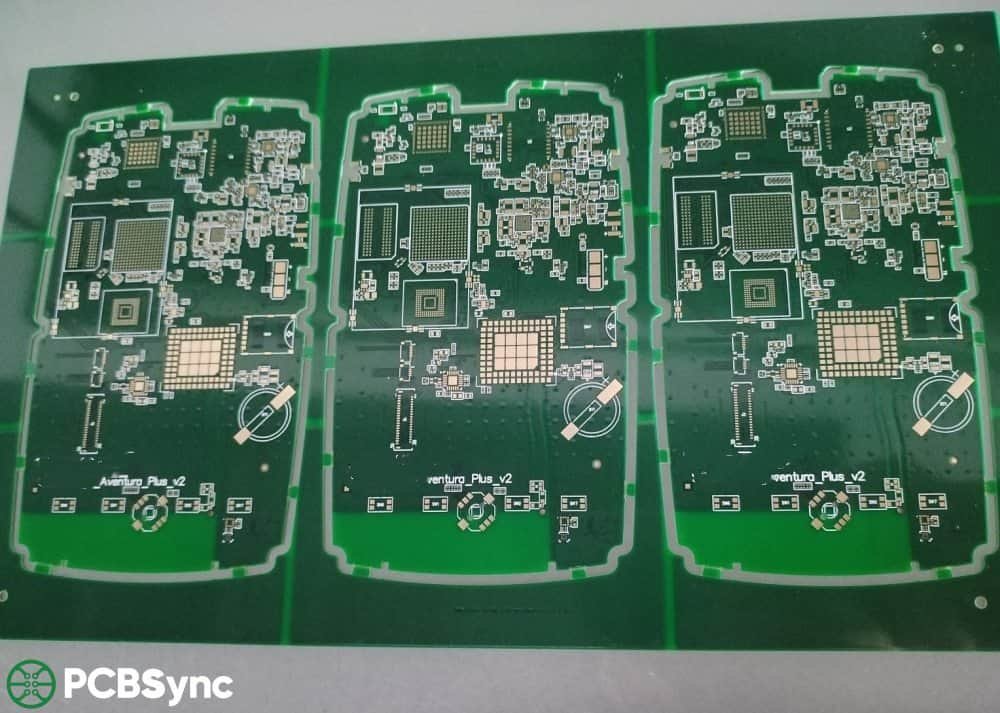
PCBSync media-library panelized PCB sample with repeated circular contact patterns
A physical PCB example. Confirm the laminate grade and its properties through material and fabrication records.
TgResin transition · method matters
TdTest-defined decomposition
CTEExpansion · direction and interval
Operating limitsRequire construction-specific evidence
01 / Your engineering starting point

Turn “high Tg” into a reviewable requirement

You do not need every answer to start. Add what you know; the planner identifies open decisions and builds a brief you can take to Contact. Calculations and inputs stay in this page until you choose to share them.

What is known about your board?

Add stack-up, test method and approval requirements

No files, account or contact details are requested here. A planner result is not material approval or a quotation.

Your next decisions

Your next engineering step

Review the material, construction and assembly requirements together.

  • Name the laminate and test method.
  • Identify board temperature, duration and assembly exposure.
  • Prepare stack-up and required evidence.
Read or manually copy your brief
Download TXTGo to Contact without copying

Use the checklist above if interactive tools are unavailable.

Review the brief and paste it into your enquiry on Contact. Nothing is submitted automatically.

02 / Compare evidence, not just a label

High Tg FR-4 material comparison

High Tg commonly describes FR-4 grades around 170–180°C and above, but supplier categories differ. Specify the grade, measurement method and whether your drawing requires a minimum value or refers to a typical datasheet value.

Material / sourceTg · DSCTd · TGA 5% lossT260 / T288Z CTE · pre / post TgZ expansion · 50–260°C
Isola 370HRCurrent manufacturer product table ↗180°C340°C60 / 30 min45 / 230 ppm/K2.8%Lower listed pre-Tg Z CTE than the other two references. Review hole construction and the full thermal history; this alone does not establish reliability.
Isola IS410Revision D · 17 Sep 2025 ↗180°C350°C50 / 10 min55 / 250 ppm/K3.5%Same listed DSC Tg as 370HR, but different delamination times and total expansion. A Tg-only substitution would miss these differences.
Isola FR408HRCurrent manufacturer product table ↗190°C360°C60 / >30 min55 / 230 ppm/K2.8%Higher listed DSC Tg does not alone decide suitability. If electrical loss matters, compare frequency-specific Dk/Df and the proposed stack-up separately.

Typical manufacturer values; sources checked 5 November 2026. Tg: DSC. Td: TGA at 5% mass loss. Delamination: TMA with copper removed. Source documents govern the test conditions. These are reference materials, not a PCBSync stock list or a substitution approval.

MOT/RTI and permitted assembly profiles are not inferred from this table. Confirm the applicable board recognition, construction and qualification. A higher Tg alone does not establish better conductivity, lower electrical loss or a longer service life.

Check the method

DSC, TMA and DMA measure different responses. Compare like-for-like methods. A headline Tg and a detailed test-table value may use different methods.

Check the construction

Core/prepreg compatibility, resin content, copper and hole structure matter. Use the laminate selection guide to refine the stack-up discussion.

Check the actual grade

For a drawing specifying Tg170 or Tg180, agree the evidence and substitution rules. Similar nominal values do not make two grades interchangeable.

When should another resin family enter the discussion?

Rigid polyimide and other specialized materials have different processing and qualification requirements. Evaluate them as a separate material route when the service conditions justify it. Do not mix their Tg numbers into an FR-4 purchasing shortlist as if the materials were interchangeable. Discuss the application and the required evidence on Contact.

03 / Design decisions that affect the build

Design the thermal requirement into the drawing

Start with the actual local board temperature and duration. An enclosure ambient or semiconductor junction temperature does not directly describe the laminate exposure.

For multilayer boards, review thickness, copper balance, the core/prepreg system and the plated-hole structure together. For HDI construction, also review build-up dielectrics, microvias and sequential processing.

Thermal expansion is a construction questionZGlass / resin + copper + hole geometrySchematic only · not to scale · not a test cross-section
Original engineering schematic. A free-expansion model helps explain the problem; it cannot replace construction-specific reliability evaluation.
01

Define the thermal history

Record service temperature and duration, soldering operations, the proposed assembly profile and anticipated rework. Ask which construction-specific evidence covers that exposure. A brief above Tg during processing and continuous operation are different questions.

02

Make the material requirement orderable

Specify the manufacturer grade or an agreed selection process, Tg method, drawing requirement, core/prepreg restrictions and who approves substitutions. Keep the material revision with the released drawing. The material guide explains the selection context.

03

Align fabrication and assembly

Share the stack-up, board outline, drills and copper weights before final release. Agree inspection and qualification separately from electrical continuity testing. Review the assembly process when multiple soldering operations or local rework are expected.

Illustrative design scenario

The drawing only says “Tg170”

The next action is to agree method, minimum versus typical value, acceptable grades and substitution approval. Choosing a catalog entry with a bigger number does not close those questions.

Illustrative design scenario

A thicker board uses the same grade

Review the plated-hole construction, Z-axis expansion and assembly history again. A material used successfully on another thickness does not prove the new board’s qualification.

What to take away

A controlled specification

Use the planner to capture open requirements, then develop the design review with the actual fabrication files. These scenarios are teaching examples, not customer case studies.

04 / Explore the mechanism

See how Z-axis expansion changes across Tg

This simple heating model uses one constant CTE below Tg and another above it. The editable starting values are hypothetical; they do not represent one of the materials in the table.

Heating only. Positive thickness and nonnegative CTE required. The model assumes free expansion, constant coefficients and an abrupt transition.

Illustrative thickness change

41.60 µm

0.04160 mm · 2.600% estimated thickness change

41.6 µm25°C245°C

Illustrative free expansion; no stress or life prediction.

Teaching model only.

Formula, assumptions and why this is not a qualification tool

ΔL = L₀ × 10⁻⁶ × (α₁ × ΔT below Tg + α₂ × ΔT above Tg). L₀ is in mm; coefficients are in ppm/K. A Celsius temperature difference has the same magnitude as a kelvin difference. Intervals are split at the assumed Tg.

The model does not include copper restraint, mechanical stress, moisture, resin viscoelasticity or thermal cycling damage. It cannot predict plated-hole life, reflow survival or an operating-temperature rating. A datasheet’s measured total expansion may differ from this two-coefficient approximation. Review low-CTE laminate selection for the wider material decision.

60-second visual explanation · no audio

Four thermal questions. Four different answers.

Tg: a resin transition

Tg describes a change in resin behavior. It is not a melting point, a permitted operating temperature or a universal pass/fail boundary.

Resin + copperTransitionConcept only · exaggerated geometry · no measured result

Scene 1 of 4 · 0 / 60 seconds

Original illustrated explanation. Manual scene controls and the text below provide a static alternative.

Read the complete explanation

Tg describes resin transition, not melting or an operating limit. Td is a test-defined decomposition measurement, not an assembly cycle allowance. CTE describes expansion by direction and temperature interval; it does not by itself predict stress or life. Operating and assembly limits need the actual board construction and applicable qualification evidence.

05 / A useful cost discussion

What changes a high Tg PCB quotation?

A meaningful quotation needs the actual grade and construction. Use these drivers to identify opportunities before comparing supplier prices; no uncalibrated dollar estimate or universal high-Tg surcharge is shown here.

Material & availability

The specified grade, core/prepreg combination and purchasing availability can change cost and schedule. Permit alternatives only through an explicit approval process.

Panel & construction

Board size, panel utilization, quantity, layers, copper and drill requirements affect the manufacturing route. Share the outline and stack-up, not just an overall area.

Verification & delivery

Extra coupons, qualification, reporting and expedited work must be scoped. Separate standard inspection from project-specific validation in the requested quotation.

Illustrative review template · not a customer record

What a material decision record should contain

Drawing revision: [project revision] · Requested grade / method: [requirement] · Proposed core and prepreg: [supplier proposal]

Open question: Does the drawing specify a minimum Tg or a typical datasheet value? Release action: agree the criterion and approved grade before substitution.

Approval owner / date: [to be completed] · Required delivery evidence: [agreed scope]. Attach the relevant document revision to the released specification.

Discuss the records your project needs →
06 / Evidence for a controlled release

Know what the quotation and delivery should identify

Ask for the proposed material and stack-up, exceptions, inspection scope and pricing basis in writing. Manufacturer datasheets describe reference materials; project records identify what was actually approved and built.

Send fabrication artwork, drills, outline, board revision, quantity and requested arrival date. For assembly, add BOM and placement data. Resolve NDA or file-transfer requirements through Contact before sending sensitive files.

PCBSync media-library panelized board sample showing repeated outlines and tooling features
Physical board geometry is visible. Laminate identity, stack-up and inspection status belong in the approved project records.
01

Review the files

Identify drawing conflicts, missing material conditions and open decisions before release.

02

Agree the material and exceptions

Record the approved grade or alternatives, core/prepreg requirements, stack-up revision and required evidence.

03

Agree inspection and delivery records

Define material traceability, conformity documentation, cross-section or other test requirements where applicable. Their availability, cost and acceptance criteria must be confirmed for the project.

This is a review checklist, not a claim that every listed test or document is included in every order. No customer report or certification is represented by the illustrative graphics on this page.

High Tg PCB questions, answered

What is a high Tg PCB?

It is a PCB specified with a laminate having a relatively high glass-transition temperature. For FR-4, the term commonly covers grades around 170–180°C and above, but the actual grade, test method and drawing requirement are more useful than the category alone.

Can I use Tg minus 20°C as the operating limit?

No universal fixed offset establishes an operating-temperature rating. Review the material, finished-board construction, exposure duration and applicable qualification. The local board temperature, assembly peak and device junction temperature are different quantities.

Does high Tg make a board dissipate heat better?

Not by itself. Thermal conductivity, copper structure, vias, interfaces and the cooling path need their own assessment. A high Tg value also does not guarantee low dielectric loss.

Why can a published Tg value change between sources?

The grade revision, test method, specimen and reported criterion can differ. Compare the current manufacturer document with the drawing requirement and retain the agreed version. Do not silently substitute a typical value for a specified minimum.

Can I request a quotation before the grade is finalized?

Yes. Identify the open material decision and provide the construction, quantities and thermal requirements. Ask the quotation to state the proposed grade, alternatives, exceptions and verification scope. Price and delivery require project review.

What should I include in a high-Tg PCB enquiry?

Provide fabrication files, board revision, quantity, requested timing, stack-up and known material requirements. Add service and assembly exposure, required records and substitution restrictions. Copy the planner brief and submit your enquiry on Contact.

Technical references: manufacturer links in the comparison table; UL explanation of board recognition and assembly profiles. References checked 5 November 2026. Engineering examples and animations are explanatory, not test evidence.

From a material question to a clear project brief

Discuss your High Tg PCB project

Bring your board revision, quantities, files and open material questions. Ask for the proposed construction, exceptions and inspection scope in the quotation.

Your enquiry is submitted on the Contact page. No order is placed by using these planning tools.