Contact Sales & After-Sales Service

Contact & Quotation

  • Inquire: Call 0086-755-23203480, or reach out via the form below/your sales contact to discuss our design, manufacturing, and assembly capabilities.
  • Quote: Email your PCB files to [email protected] (Preferred for large files) or submit online. We will contact you promptly. Please ensure your email is correct.
Drag & Drop Files, Choose Files to Upload You can upload up to 3 files.

Notes:
For PCB fabrication, we require PCB design file in Gerber RS-274X format (most preferred), *.PCB/DDB (Protel, inform your program version) format or *.BRD (Eagle) format. For PCB assembly, we require PCB design file in above mentioned format, drilling file and BOM. Click to download BOM template To avoid file missing, please include all files into one folder and compress it into .zip or .rar format.

PCB Assembly / PCB First Article Inspection
PCBSync · Inspection, test & quality planning

PCB First Article Inspection Before the Next Production Step

Align the first assembly with your controlled BOM, drawings and inspection requirements. Define the hold point, evidence and approval responsibilities before the remainder of the build proceeds.

Prototype through production · scope and schedule confirmed after file review

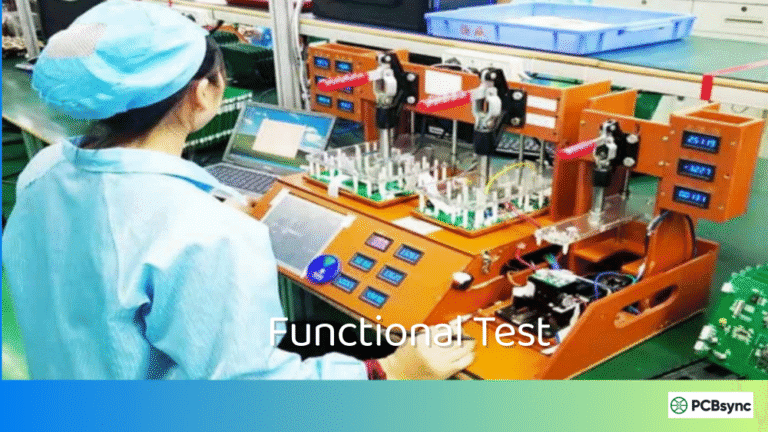
First-article checking workstation with an assembly, test leads and an operator.
At a glance: A first-article review checks the defined initial build and its records. It does not replace the agreed inspection and testing of subsequent production.
Prepare a clearer project request

PCB First Article Inspection tools

PCB First Article Inspection workbench

PCBSync Engineering Tools · no account required · calculations run in your browser

Mark what you have prepared

Match the scope to the decision

PCB First Article Inspection: scope, limitations and evidence

Decision / stageWhat to defineEvidence or next action
BaselineBOM, drawing, options and revisionsConsistent acceptance reference
Hold pointUnit identity and inspection stageClear stop / proceed rule
EvidenceRequirement, method and actual resultTraceable review package
ExceptionsFinding, correction and dispositionAuthorized documented action
ContinuationApproved baseline and change triggersControlled production handover
Practical engineering and purchasing guidance

Define the test before approving the result

Define the first-article scope before assembly starts

Identify the board and assembly revisions, populated options, approved component choices and applicable workmanship requirements. State which physical features, component identities, orientations and measurements need review. Include firmware, programming or functional checks where they belong in the agreed scope.

Specify the sample identity and the stage at which review occurs. Some checks are easier before an enclosure, coating or later operation hides the feature. Include that hold point in the prototype assembly brief when reviewing an initial build. A clear hold point helps the production team know what can continue and what must wait for an authorized decision.

Use controlled data for a meaningful comparison

Provide a consistent BOM, placement data, assembly drawing and relevant specifications. Resolve differences between files before treating any one of them as the acceptance reference. Call out fitted and not-fitted components, polarity marks and approved substitutions explicitly.

A reference photograph can support orientation and physical comparisons, but it may not reveal component value, hidden joints or electrical behavior. Agree the evidence method for each important requirement. Keep a connection between the requirement, inspected unit, result and supporting record.

Separate evidence collection from approval

Collect the requested observations and test results, then review exceptions against the specified requirements. Record nonconforming findings without silently changing them to pass. Define who can approve a correction, authorize further work or accept a documented exception under the applicable contract.

Use the readiness workbench to identify missing project inputs before requesting a quotation. The time scenario uses your own inspection and handling assumptions for a small initial run; it excludes the customer response time and any unplanned investigation unless those are separately included.

Agree what happens after the first article

Carry the approved baseline into the shipment-report review, matching certificates and test evidence to each delivered lot. Use a one-PCBA traceability audit to check that material, rework and final-test records remain connected after production.

Document the approved baseline and retain the decision with its evidence. Determine which actions require another inspection after correction and which changes trigger a renewed first-article review. A changed BOM option or manufacturing process can affect requirements that were previously accepted.

Send PCBSync the required report format, review contacts and intended production timing with your PCB assembly requirements. If you need a specific contractual FAI package, state that requirement before the order. The quotation should distinguish routine first-piece verification, customer review and any additional formal documentation or testing.

Keep the review concrete

Include these requirements in your enquiry

01

Consistent BOM, placement data and drawing

02

Build revision, options and approved substitutions

03

Inspection scope, criteria and sample identity

04

Hold point and authorized reviewers

05

Required report, images and test evidence

06

Correction, reinspection and continuation rules

Mark unresolved items explicitly. Ask the quotation to identify proposed exceptions, required customer approvals and any inspection or special-process charges that remain open.

See the physical construction

First-article review and assembled-board examples

Real photographs show a checking workstation and assembled products from the media library. They illustrate inspection and construction context, not a customer-approved FAI report or evidence of a particular certification.

Browse the supporting pages

First Article Inspection guide library

1 supporting guides

Answers before requesting a quote

PCB First Article Inspection FAQ

Is the first board automatically the FAI sample?

Agree the sample selection and production stage for the project. The meaningful reference is the controlled inspection plan and identifiable build.

Does first-article approval guarantee every later board?

No. Subsequent production still needs the agreed process controls, inspections and tests.

Can I request photos before the full run?

Include that request, the features to show and the approval hold point in the quotation scope. Confirm the reporting method and timing with the project team.

Technical links checked 3 October 2026. Apply the current documentation and project-specific acceptance requirements. Planners do not certify manufacturability or validate uploaded design files.

From planning to a reviewed quotation

Discuss your PCB First Article Inspection requirements

Send the scope you want reviewed

Add your test-scope brief or planning scenario from the tools above. Include the controlled product revision, requested quantity, required timing and open acceptance questions.

Provide the controlled BOM, placement data, assembly drawing, product revision and approved options. Add the required inspection/report format, acceptance source, sample and hold-point requirements, authorized review route and any contractual FAI documentation requirements.

Email: [email protected]
Phone: +86-755-23203480

Review the message and attachments before sending. An enquiry does not place an order.

Drag & Drop Files, Choose Files to Upload You can upload up to 3 files.