Contact Sales & After-Sales Service

Contact & Quotation

  • Inquire: Call 0086-755-23203480, or reach out via the form below/your sales contact to discuss our design, manufacturing, and assembly capabilities.
  • Quote: Email your PCB files to [email protected] (Preferred for large files) or submit online. We will contact you promptly. Please ensure your email is correct.
One place for your enquiry

Continue on Contact

  1. Download the planning worksheet and review the open items.
  2. Send your requirements and available fabrication files on Contact.
  3. Agree the construction, inspection scope and quotation before ordering.
Request a project review →

Need an NDA or a particular file-transfer method? Contact us before sharing confidential files.

Notes:
For PCB fabrication, we require PCB design file in Gerber RS-274X format (most preferred), *.PCB/DDB (Protel, inform your program version) format or *.BRD (Eagle) format. For PCB assembly, we require PCB design file in above mentioned format, drilling file and BOM. Click to download BOM template To avoid file missing, please include all files into one folder and compress it into .zip or .rar format.

Project-specific supplier qualification and prototype-to-production process control

32 Layer PCB: Qualify the Process Behind the Capability Claim

A supplier's maximum layer count is an entry point for a 32 layer PCB discussion, not proof that the complete design fits its production process. Evaluate the actual combination of material, thickness, copper, hole structures and verification requirements. Then connect the proposed manufacturing site and build sequence to evidence that procurement and engineering can review.

Design decisions · Construction review · Fabrication & assembly planning

32-layer process qualification roadmapPlanning illustration: 32-layer process qualification roadmap. Read the labelled review points below the figure. This is not an approved manufacturing stackup.32 LAYERS / PLANNING CONCEPTRequirementsSite + processComparable evidencePrototype acceptanceRepeat-build control
  • Actual requirement combination
  • Named site and process
  • Comparable evidence
  • Prototype acceptance
  • Controlled repeat build
  • Conceptual layer diagram

Planning illustration. Geometry and layer roles require project review; no dimensions or process approval are implied.

32-layer process qualification roadmap. Engineering illustration; the layer count does not establish a qualified manufacturing process.
Define the project

32-Layer Supplier Evidence Review

Configure the board and prepare your design questions. This custom layer count uses an engineering quotation. The tool prepares a specification and decision brief without inventing a price.

Engineering worksheet · no sign-up

Supplier-fit evidence matrix

Confirmation requires relevant evidence, not a layer-count claim. Leave confidential customer records out of this worksheet.

Enable JavaScript to use this worksheet. You can also send your requirements through Contact.

Discuss this project →

Inputs stay in this page until you download them. Nothing is submitted automatically. Review the worksheet, then attach it on Contact.

WORKED ENGINEERING EXAMPLE

Distinguish confirmed scope from conditional capability

Hypothetical design scenario · Original conceptual diagram · Not a customer case or approved fabrication specification

Distinguish confirmed scope from conditional capability. Original conceptual engineering diagram; hypothetical values.01Confirmed evidence02Conditional / trial03Unresolved requirement
Confirmed evidence · Conditional / trial · Unresolved requirement. Diagram is not to scale.

A hypothetical supplier discussion contains three different states: a proposed thickness is documented, a via process needs a trial, and a material option is still unknown. Marking all three as available would hide risk. A thirty-two-layer review should keep these states separate.

Use this in your design review

  1. Attach the relevant evidence or proposal to each confirmed item.
  2. State the condition and owner for every conditional item.
  3. Keep unresolved requirements visible in the quotation brief.

What to bring to the review

A layer-count listing does not establish project fit. The construction, materials, tolerances and verification scope must match the actual design.

Discuss this construction →
Board specifications, layer concepts & fabrication brief
PCBSync engineering workbench

32 Layer PCB design & cost planner

Plan the board. Compare the construction. Prepare a useful RFQ.

Enable JavaScript for the planner, or use the Contact page. No sign-in or design-file upload is needed to explore the tool.

01 / Your board specification

02 / Electrical structure

Compare the role of each copper layer before committing to a layout. Coloured rows show electrical assignments, not dielectric dimensions or a pressed stackup.

Confirm material grade, copper, dielectric spacing, impedance and tolerance with engineering. Extra layers alone do not guarantee a continuous return path.

Electrical concept

Signal / ground / power · not to scale

Engineering limits and data storage

This tool prepares specifications; it does not inspect files or issue a price, approved stackup, impedance result or delivery commitment. Non-personal specifications may be retained in this browser tab for two hours. Download and review your brief before sending it through Contact.

Match the whole requirement

Compare the requested combination with the supplier's process

Prepare a concise requirement sheet containing board size, finished thickness, copper weights, materials, controlled geometries, smallest relevant holes and any special interconnects. Ask the supplier to mark each item as a routine production feature, an engineering-review item or a development condition for the proposed site.

Do not combine unrelated maxima from a capabilities table. The maximum thickness, minimum hole and finest trace spacing may come from different constructions and may not be available together. Request a written proposal for the actual combination. A supplier with a higher advertised layer ceiling can still be a weaker fit for a specific material or hole-family requirement.

  • Identify the site that will fabricate the board.
  • Record any subcontracted operations and who controls their acceptance.
Understand the construction

Request the actual lamination and interconnect sequence

Thirty-two copper layers do not by themselves require HDI or a fixed number of sequential lamination cycles. A conventional through-hole multilayer and a build using buried or build-up interconnects can have the same final layer count but different manufacturing routes.

Ask for a construction diagram showing the subassemblies, drilled spans and sequence needed by the design. Check that every proposed via family can be formed at the indicated stage and that the material system is appropriate for the planned processing. The goal is a reviewable process proposal, not a request for a supplier's proprietary recipe. Resolve any conflict between the proposed sequence and the released layer-span data.

32-Layer Supplier Evidence Review

  1. Manufacturing responsibility
  2. Capability match
  3. Proposed process status
  4. Construction sequence
  5. Acceptance evidence
  6. Repeat-order changes

Work through these decisions in the planner. Keep the resulting brief attached to the same project revision.

A review sequence for this 32-layer project. Selections in the tool create your own brief.
Ask for relevant evidence

Use comparable records rather than unrelated sample boards

A photograph of a high-layer-count board does not establish performance for your construction. Ask for evidence relevant to the difficult feature: a comparable material build, hole span, copper requirement or registration need. Supplier-provided examples can be anonymized, but their conditions should still be clear enough to judge relevance.

Review the type and scope of each record. A certificate may establish a management-system scope; a microsection documents sampled physical features; an electrical report covers a specified test. These pieces complement one another. Keep missing evidence visible instead of treating one document as a substitute for all of the project's acceptance requirements.

Claim to reviewEvidence to requestScope to confirm
Routine constructionComparable process or product recordMaterial, thickness and hole structure
Inspection coverageExample report and proposed planMeasured features and sampling
Manufacturing responsibilitySite and operation listIn-house and subcontracted steps
Qualification statusApplicable current documentationSite, product/process scope and validity
Qualification build

Define prototype acceptance before production tooling

Turn unresolved features into a PCB prototyping plan with named acceptance criteria and responsible reviewers. Identify the coupons, representative sections, dimensional checks and electrical measurements required by the design. Where environmental or assembly qualification is needed, define that program separately with the relevant engineering team.

Agree what happens if the first build needs a material, stack or process change. Record whether the change requires another sample review or a targeted check of affected features. A prototype should answer the open engineering questions, rather than simply demonstrate that a board can be shipped. Release to the next stage when the agreed evidence has been reviewed and remaining exceptions are formally resolved.

  • Distinguish demonstration quantities from qualified repeat production.
  • Retain the actual build revision with the acceptance record.
Procurement controls

Keep the approved process tied to future orders

Make the quotation identify the proposed fabrication site, stack revision, approved material list, hole construction and report package. Distinguish one-time qualification or tooling work from recurring production inspection. Ask which manufacturing or material changes require notice and engineering approval before a repeat build.

Control the transition from prototype to production. A change of site, panel layout, material construction or interconnect process may affect the relevance of the first-build evidence. Keep lot identifiers linked to the delivered records and define responsibility for investigating a discrepancy. Pricing and schedule for a thirty-two-layer board should follow this agreed scope through engineering quotation, with unresolved development conditions stated explicitly.

  • Preserve the approved exceptions and change-notification rules.
  • Compare suppliers on the same product and evidence requirements.
From requirements to evidence

Connect the proposed construction to the inspection plan.

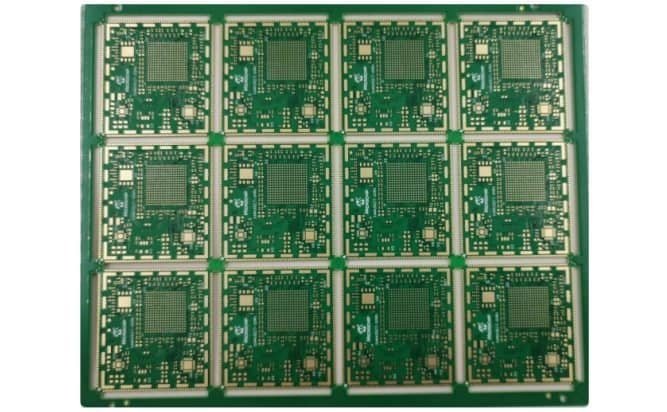
Panelized PCB sample from the PCBSync media library
PCBSync media-library sample illustrating panel format. Project-specific layer count and materials belong in the controlled fabrication record.

What should accompany the quotation?

  • The intended manufacturing site and responsibilities are known.
  • The complete requirement combination has been reviewed.
  • Prototype acceptance answers the open engineering questions.
  • Repeat orders preserve or requalify the approved construction.

Match the quoted construction, inspection scope and delivery requirements to the released revision. Confirm what is included before placing an order.

Specific questions

32 Layer PCB questions, answered.

Does a maximum capability above 32 layers prove a supplier can build my PCB?

No. The complete combination of materials, thickness, copper, geometry and acceptance requirements must fit the proposed process. Ask for a project-specific review rather than combining independent maxima from a capability table.

Does every 32 layer PCB need several sequential laminations?

No. The interconnect construction determines the required sequence. Conventional through-hole designs and sequential builds can share a final layer count. Request the actual construction diagram for the proposed board.

How should I distinguish prototype capability from production capability?

Ask whether the requested combination is routinely produced at the named site or requires development work. Review the evidence and define the conditions for moving from an initial build to repeat production.

Are supplier certificates enough for qualification?

They are one part of the evidence when applicable, with a defined scope and validity. They do not replace the stack proposal, relevant process records or the agreed product inspection and validation plan.

What changes should trigger another engineering review?

Review changes that affect the approved basis, such as manufacturing site, material construction, stack dimensions, hole families or process sequence. The extent of requalification should match the changed features and project requirements.

Engineering quotation

Request a 32-layer PCB review.

Start with the requirements you know. Include unresolved decisions so engineering can review the construction with you.

  • The intended manufacturing site and responsibilities are known.
  • The complete requirement combination has been reviewed.
  • Prototype acceptance answers the open engineering questions.
  • Repeat orders preserve or requalify the approved construction.

Attach fabrication data, the proposed stackup and quantity breaks when ready. For assembly, include the BOM, placement data and inspection requirements.

Discuss NDA arrangements before sharing confidential files. Ask for current certification scope and records relevant to your project.

Contact PCBSync · Include PCB assembly

One place for your enquiry

Continue on Contact

  1. Download the planning worksheet and review the open items.
  2. Send your requirements and available fabrication files on Contact.
  3. Agree the construction, inspection scope and quotation before ordering.
Request a project review →

Need an NDA or a particular file-transfer method? Contact us before sharing confidential files.

Further engineering reading: TTM Technologies: Conventional PCB Manufacturing Isola: IS580G Processing Guide

PCBSync engineering resources · Updated 1 October 2026 · Planning guidance and illustrations are not approved manufacturing stackups.